
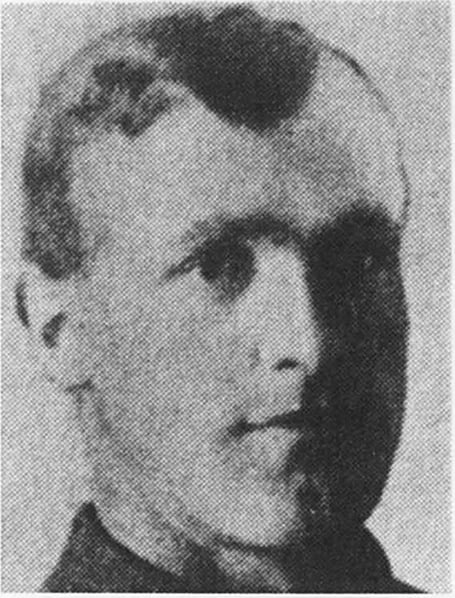
Following last week’s article on local commemorations for Oliver Brooks being awarded the Victoria Cross, due to take place this Thursday, another local soldier who served in WWI has also been named as receiving the award, posthumously.
George Prowse was born on 29th August 1886 in Gilfach Goch, Llantrisant, South Wales. His father, George Harry Prowse, was married to Harriet and there were five other siblings – Reuben, Dora, Phyllis, Jenny and Hilda. George Harry was a miner, and when the family moved to Meadgate, Camerton, he worked as banksman at the colliery. George followed his father into the pit as a miner and became very interested in the local football scene, at one time being Captain of the Camerton Reserves team.
George moved to South Wales in 1908 at the age of 22, taking up lodgings and working at the Mountain Colliery, Gorseinon. In 1913, he married Sarah Lewis in Swansea and on 27th February, 1915, George and his friend, William Henry Sherborne, of Radford, near Camerton, enlisted together into the Royal Navy Volunteer Reserve and were soon called up for service. The pair were split up, with William going on to become an able seaman taking part in the Battle of Jutland aboard HMS Warspite, whilst George was promoted to Petty Officer on 20th June and was drafted to Gallipoli on 9th September 1915, joining the Drake Battalion of the Royal Naval Division on 21st September. He was wounded twice, first during the Battle of the Somme, November 1916 and again at Arras in April 1917.
George returned to his battalion on 4th April 1918 in France and was promoted to Chief Petty Officer. He was awarded the Distinguished Conduct medal for action at Logeast Wood on 21st August 1918. The following month, his battalion was involved in the 23rd Division’s advance on the Hindenburg line, through the villages of Queant, Pronville and Inchy en Artois.

.jpg?width=209&height=140&crop=209:145,smart&quality=75)
It was for action near Pronville, on 2nd – 4th September, that George Prowse was subsequently awarded the Victoria Cross. Although George was aware that his company commander, Sub-Lieutenant Simmons DCM, DSO, MC, had recommended him for this award, the official London Gazette entry was not issued until October 30th, 1918 – over a month after his death.
The citation for the VC states it was for ‘Most conspicuous bravery and devotion to duty when, during an advance, a portion of his company became disorganised by heavy machine gun fire from a strong enemy point. Collecting what men were available, he led them with great coolness and bravery against this strong point, capturing it, together with 28 prisoners and five machine guns.
‘Later he took a patrol forward in the face of much enemy opposition, and established it on high ground. On another occasion he displayed great heroism by attacking single-handed an ammunition limber.
‘Two days later he rendered valuable services when covering the advance of his company with a Lewis gun section, and located later on two machine-gun positions in a concrete emplacement, which were holding up the advance of the battalion on the right. With complete disregard of personal danger he rushed forward with a small party and attacked and captured these posts. He was the only survivor of this gallant party, but by this daring and heroic action, he enabled the battalion on the right to push forward without further machine-gun fire from the village. Throughout the whole operations his magnificent example and leadership were an inspiration to all, and his courage was superb.’
George Prowse was killed in action later that month, on 27th September 1918, aged 32. He had been leading another attack at Arleux when the 63rd Division attacked the Bapaume-Cambrai Road.
Although he has no known grave, he is commemorated on the Vis-en-Artois Memorial to the Missing and his name has pride of place on the Camerton War Memorial. His widow, Sarah, travelled to London to receive her husband’s posthumous Victoria Cross from King George V at Buckingham Palace on 17th July 1919.
It would seem heroism ran in the family, as George’s elder brother, Reuben, a corporal in the Royal Welsh Fusiliers was awarded the Meritorious Service Medal for picking up a live grenade that had fallen in a trench occupied by six men and two officers, falling close to two boxes of live grenades. Corporal Prowse pounced on the bomb and threw it clear of the trench, saving their lives.
Radstock Museum currently has a small display about Oliver Brooks, with an information board loaned by Bath Library. The museum opens from 2 p.m. – 5 p.m. Tuesday through to Friday and on Sundays, with a full day on Saturdays, 11 a.m. – 5 p.m.
With thanks to Bill Blanning, from Fosseway Press, author of In the Company of Heroes, and Dick Graham, c/o Five Arches for this information. Reference Five Arches Special Issue, ‘Lest We
Forget’, November, 1998, Keith Trivett. In the Company of Heroes can be purchased from Frome Road, Radstock, email: [email protected]. More on local history can be read in Five Arches, which can be purchased from Radstock Museum, with back copies also available. Email: [email protected]