
STANTON Drew’s stone circles were probably erected sometime around 4,500 years ago. This was when the "Neolithic Revolution" saw a major lifestyle change, moving from migration and hunter-gathering to settled, permanent farming communities.
At the recent Chew Valley Forum we heard from two wonderfully eloquent sixth formers at Chew Valley School on what living in the Chew Valley means to them now. Two of the things that came across were the sense of belonging in the countryside, and the importance of community. Community mattered in Neolithic times, and it matters now.
When Neolithic people became farmers, they also developed social structures. Today we have resident and local interest groups, schools, the police, parish and local councils and central government that deliver change. Change is inevitable. Often some change, for example the big stuff like government housing targets, is beyond our control. Inevitably we won't always agree about change, so listening and discussing issues and respecting the variety of opinion is important.
Four years ago, Chew Magna High Street was a mess, with cracked surfaces and potholes. Many of us quite rightly complained. We campaigned to get the road repaired. Filling a few potholes was not good enough. Ultimately the road was fully resurfaced. Most people were pleased, but some felt it looked too modern and were concerned that because it was smooth, cars would go too fast.

We were chatting to residents in Compton Martin recently about proposals from the Walk Wheel Cycle Trust to widen the footpath to the village hall and create a priority chicane on the A368 to slow traffic. One person thought this was a good idea and the next person we spoke to thought it was terrible.
When the lollipop lady in Bishop Sutton retired, B&NES offered to put in a zebra crossing. At the time this change was opposed. The council understandably assumed a controlled crossing wasn't wanted. But so many people told us they needed a zebra crossing that we have fought for this alongside our residents and the school. The current parish council now support the principle of a controlled crossing. The surveys and assessments are all nearly done, and we are committed to getting construction of this zebra crossing completed this year.
But sometimes you must agree to disagree.
The possibility of developing three hundred homes in Bishop Sutton over the next twenty years (as described in the Local Plan consultation) to meet the government’s huge housing targets is supported by the parish council. Chew Valley homes are increasingly unaffordable, but we cannot support this proposal. It is unreasonably large and, we believe, does not reflect the majority view of the village. Even under the government’s own criteria, Bishop Sutton is not identified as a sustainable location for development on this scale.
We became councillors to represent and stand up for the residents of the Chew Valley. We will continue to do so. We won't always succeed, not everyone will agree, but we will listen and we will try our best.
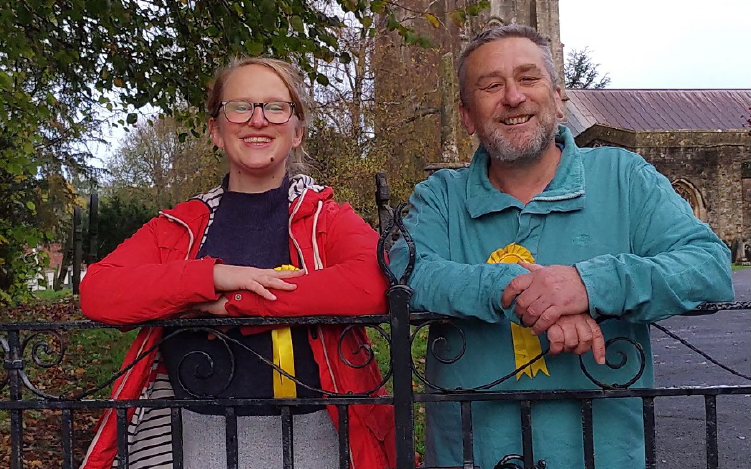
By Cllrs Anna Box and David Harding