
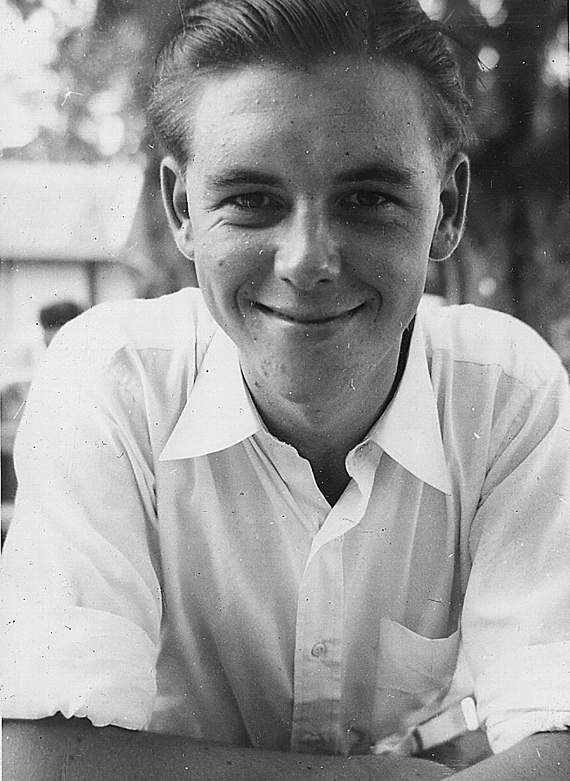
At a time when Centenary events to commemorate World War I are taking place, alongside the 70th Anniversaries of VE and VJ Day this year, a local Town Councillor, who completed his National Service in Malaya, ending in 1957, is asking for readers with similar experiences to get in touch.
John Whittock, well known in the area politically over the past forty years, most recently as Clerk at Peasedown St John Parish Council and now a Radstock Town Councillor, says that this is the time for those with National Service experience to get together, as most will be between eighty and ninety years old and to not do so would be a lost opportunity.
Mr Whittock was an apprentice at Purnell Printworks in Paulton, which closed at the end of 2005, after more than 150 years in business, when he was called up for National Service. From 1949, men aged between 17 and 21 years had to register for National Service to serve in the armed forces. They would likely serve up to eighteen months and remain on the reserve list for four years after that. Only those who worked in ‘essential services’, such as coal mining, farming and the merchant navy, were exempt. The last National Servicemen to leave the armed forces did so in May 1963.
With the end of the Second World War, extra forces were needed for operations in many areas, such as Korea, Malaya and Singapore, with Mr Whittock’s cousin fighting in Sudan and friends serving in Kenya and Cyprus. Rather than delay his National Service, John decided to “make the best of it”, training in Oswestry and Larkhill and staying in old SS barracks in Germany before travelling to the Woolwich barracks in London at the end of 1955, prior to boarding a boat to send him out to Singapore.
.png?width=209&height=140&crop=209:145,smart&quality=75)


John had trained as a Technical Assistant and a Gunner, however, whilst travelling through a very choppy Bay of Biscay, a call went out to anyone on board with print experience to make themselves known.
“There had been a bit of an emergency below deck,” he laughs. “I went to find out what had happened and there was rough type all over the floor due to the choppy waters. I spent the next three weeks putting it all back.”
Once they had landed in Singapore, further training took place before moving on to Malaya, where the Battery were initially sharing with the Welsh Fusiliers. John took turns to be the Duty Clerk, which involved deciphering encryptions and relaying messages home. His glowing report as Documents Clerk and Temporary Battery Chief Clerk, written in 1957, says he was ‘a very able and willing worker, who has been a great asset to the unit’, dealing ‘well with responsibilities far above normal for his age and rank.’
Although Mr Whittock was not on the front line as such, he remembers always being on high alert. “When we were being transported around, I would always be thinking about possible routes out of vehicles and we were always armed.
“Hanging up my mosquito net one night on the outside of the armoury, a room with an ordinary wooden door, I was struck by the fact that I could be a prime target, as the Communist Terrorists obtained most of their arms by stealing and ambushing. Behind the door were rifles, Bren guns and ammunition for the whole troop.
“I’ve also just rediscovered my old British Forces Identity Certificate, which we would have to hand over if we were captured – and tell them nothing else, other than what is on that card.
“Whilst many were counting down the days, we did get on with it and I had experiences that I will never forget, such as working alongside the Gurkhas and playing rugby in Kuala Lumpur for the British Army and football against local prison guards.
“I remember on our way home, there was no food or water on the plane and I was not a keen flier. We had to keep stopping – I remember landing in Delhi, plus, I spent three days in Baghdad in the rain waiting for better weather so that we could carry on.”
John was tempted to carry on with his career in the army following the end of his National Service, he admits. But three weeks after his return, he asked the lady he had been writing to three times a week to be his wife. And the rest is history – he returned to Purnells and then became involved in local politics in 1976, as part of Clandown PTA. He is now a member of the International Institute of Municipal Clerks.
If any readers with National Service history would like to get in touch, they can do so via The Journal by emailing: [email protected] or visit us at our offices (Wednesday – Friday) at the Midsomer Enterprise Park, Radstock Road, Unit 22 at the Wansdyke Business Centre.
Comments
This article has no comments yet. Be the first to leave a comment.