

Interested in your local heritage? Somerset Coalfield Life at Radstock Museum is looking for new volunteers to join their team.
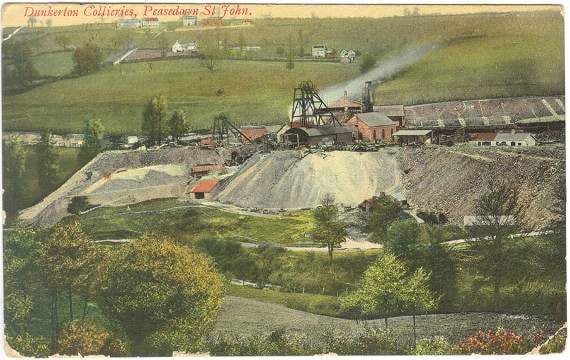
This lovely tinted postcard (pictured) is of Dunkerton Colliery, near Peasedown St John, in the 1920s. Colour postcards were actually black and white photographs, which in the early days, were hand-tinted using stencils and colour washes, but multi-colour printing developed in the 1920s, again, based on tinting. Colour choice was left to the colourist and strange results or incorrect colours were not uncommon.
Postcards were available from the 1890s, but it was not until 1902 that both the message and the address were allowed to be on one side, with the picture on the other.
Before that, postcards had no pictures on them. Although colour photography had been experimented with since 1860, the production of colour prints was not a practical proposition until the end of the 19th century, and even then, was very expensive. Full colour postcards were not produced until the end of the 1930s.


Dunkerton colliery is just one of over seventy coal mines that were dotted across our rural landscape for more than 200 years. The lives of the miners, their wives and families and all the industries, which supported the mines locally, are remembered and celebrated at Somerset Coalfield Life at Radstock Museum.
As volunteers at Radstock Museum, we are passionate about keeping our heritage alive and relevant to a modern generation, and so it is really important that we have enthusiastic volunteers to keep the museum running well into the future.
The mines brought with them roads, railways and the Somersetshire Coal Canal. The miners, who worked the famously narrow Somerset coal seams (many only two feet high), were a hardy breed, enduring long shifts underground in dark and dangerous conditions. Rock falls, flooded tunnels and working in extreme heat – often with only enough space to lie all day on your side, hacking away at the coal face or dragging puts of coal hundreds of yards on all fours. Cutting your hands, knees and feet to pieces was all in a day’s work.
All the miners’ cottages lining our local streets, the coal tips (batches) which shape our environment today, now mostly covered in woodland, the Radstock mining wheel, the ‘volcano’ batch at Paulton, the Somersetshire Coal Canal (now undergoing restoration) and the Midsomer Norton South Station and railway line, are some of the few signs left of this once massive industry, which stretched from Nettlebridge and Mells to Pensford.
If you are interested in volunteering at the museum and want to find out more, come along to a no obligation Open Evening on Wednesday, 23rd August, 7 p.m. at Radstock Museum, where our Chairman, Nick Hall, Development Coordinator, Miranda Litchfield, and other volunteers from different areas in the museum, will be on hand to chat about their roles and what it is like to volunteer. Refreshments will be provided.
There is no need to book, you can just turn up, but it would be helpful to know rough numbers in advance. Please email Miranda Litchfield at: [email protected], or ring and leave a message on: 01761 437722. If you can’t make the open evening, but would like to know more, please contact Miranda as above. We really look forward to seeing or hearing from you.
Comments
This article has no comments yet. Be the first to leave a comment.