
With the Government’s recent announcement of the blocks of land contained within two tranches of Petroleum Exploration Development Licenses (PEDLs), the Mendips, apart from the western flank, will remain frack free for the present.
The Oil and Gas Authority has confirmed directly to Frack Free Somer Valley that no licences have been earmarked in the Somerset area in the first 27 blocks offered without further assessment, but thirteen blocks located to the west and east of Somerset, within the second tranche of 132 blocks, are being subjected to further environmental consideration under the Conservation of Habitats and Species Regulation 2010.
Consultation responses are required by 29th September 2015.
Frack Free Somer Valley, in liaison with Gas Field Free Mendip and Frack Free Chew Valley groups, directly petitioned Andy Samuel, CE of the OGA for the area contained within PEDL 227 to be totally withdrawn from imminent and future licensing rounds, citing its complex geology where historic incidents of pollution have proven that the caves and water systems within them are highly susceptible to any contamination which can be transported for miles from its original source via underground waterways, together with the fact that this licence had previously been let and relinquished three times. The PEDL 227 relinquishment report will be made public in September 2015.


Meanwhile, the Government has reduced the time limit for planning decisions by local Councils on fracking applications to sixteen weeks and is providing extra funds for the decision-making process to combat claims of continued budget cuts causing shortfalls in relevant staffing levels.
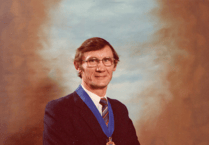
Martyn Plant, Frack Free Somer Valley Chairman, said: “Whilst we can feel justifiably satisfied that our representations on PEDL 227 to the OGA have had a bearing on its exclusion from this Round, we remain concerned that the
western flank of the Mendips and the Somerset coastline from Minehead to Weston-super-Mare are at risk. The Somerset campaigning groups will therefore continue to pool informed local knowledge in the fight against the industrialisation of any part of the county by fracking processes.”
Joan Norman