
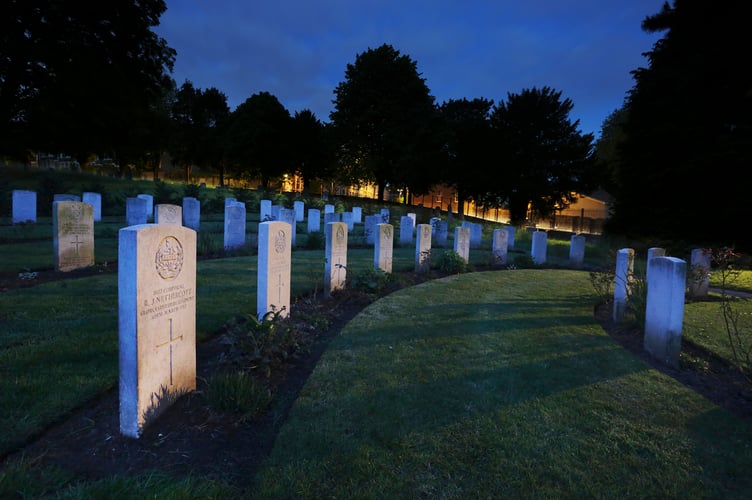
AT Norton - Radstock Photographic Society, the recent speaker, Marko Dukta, was one of the most interesting, and his timely talk ‘At the going down of the sun’, on 10th November, was both thought provoking, and inspiring.
Of Italian/Ukrainian heritage, Marko has a history in marine biology, and has worked extensively in the field of commercial photography. He is currently studying for a PhD at the University of Gloucestershire.
Marko is well known locally for his work with Bristol Cathedral, particularly in the context of its recent exhibition, featuring the First World War, its impact on the area, and its enduring relevance to the local families.
His ability to blend historical events with a narrative of photographic techniques, and poignant stories of the people who died in the conflicts, is second to none, and the research he has undertaken over the past four years was skilfully and sensitively presented to members in a riveting two hour talk.



His epilogue began with the very familiar extract from Binyon’s poem “The Fallen” :
“Age shall not weary them, nor the years condemn.
At the going down of the sun and in the morning.
We will remember them.”
And remember them members certainly did, as he took them on a fascinating photographic journey through the moonlit memorials in the sprawling, Victorian graveyards of Bristol, Bath and its surrounding areas. Through Marko, those who died in the War and are buried in Arnos Vale, Haycombe and the like, were brought back to living memory through snippets of their past, fading photographs and anecdotal insights, born of passionate, personal research into their direct descendants.
Using the natural urban light of the environments, together with subtle illumination of individual graves or headstones, Marko captured the mood and atmosphere of the cemeteries at the going down of the sun. Through these, we were first made aware of those buried beneath the memorial stones, or in communal graves nearby, and later led to a deeper understanding of their contexts and their unique place in our local history, through Marko’s thoughtful, matter of fact commentary.
We learned of Millie, widowed in the Great War at 35, pictured in later years on a beach in a grainy black and white photo, with two grown up daughters and her grandson, Terence Pompey, now in his 80s who was interviewed by Marko, collecting the finer details for his admirable project.
Marko’s talk was a wonderful social comment, that brought history alive, and its largely unsung heroes back to life, in the haunting images he created. It is certainly an evening we will remember fondly, especially on Remembrance Sunday, as we wear our poppies with pride and considerably more insight as a result of his talk.
Jenny Short
Comments
This article has no comments yet. Be the first to leave a comment.