
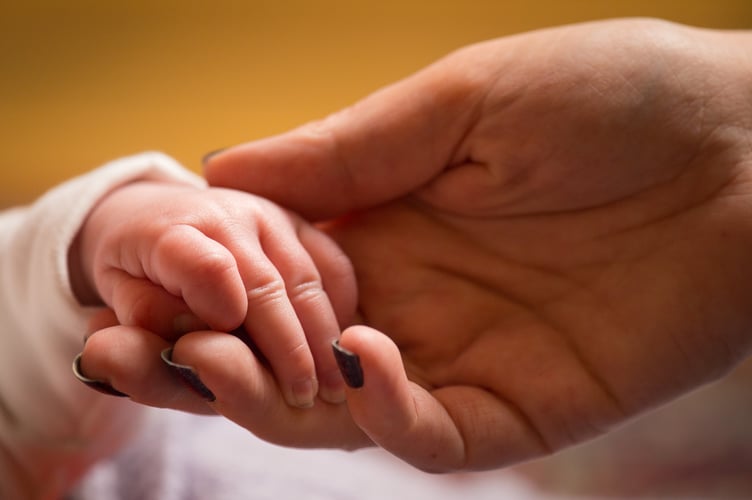
It comes after a national report found NHS maternity units are delivering "unacceptable care" with some women left to "bleed out" in bathrooms and babies suffering avoidable deaths.
Baroness Valerie Amos, who is leading the National Maternity and Neonatal Investigation, has spoken to more than 170 families across England, including those whose babies have died because of failings in care.
The latest maternity data from NHS England shows there were around 3,970 babies delivered at Royal United Hospitals Bath in the year to March.
 Births in the University Hospitals of Bristol and Weston fell by nearly a fifth
 Road closures: one for Bath and North East Somerset drivers over the next fortnight
 More hospital superbug cases detected at Royal United Hospitals Bath
 Food hygiene ratings handed to three Bath and North East Somerset establishments
This was a slight decrease on the 4,095 a year before, but a slight rise from 3,844 over the last decade.
All recent figures are rounded to the nearest five.
Nationally, there were 542,235 births recorded in the year to March, a slight fall from 545,149 a year earlier, but a 15% decline since 2015.
The data also shows 46% of deliveries in Royal United Hospitals Bath were caesareans, and 14% were emergency caesareans.
These figures were 23% and 14% in 2015 respectively.
Across England 45% of births were delivered by caesarean in the year to March – up from 27% a decade earlier.
Dr Alison Wright, president of the Royal College of Obstetricians and Gynaecologists, said there were "varied and complex factors" contributing to the increase in caesareans.
She added: "we must ensure that services are appropriately prepared, with the right staffing levels, training and facilities to manage increasingly complex births and increasing interventions."
Baroness Amos' report shows the NHS has recorded 748 recommendations relating to maternity and neonatal care in the past decade.
She described this as "staggering", adding: "This naturally raises an important question: with so many thorough and far-reaching reviews already completed, why are we in England still struggling to provide safe, reliable maternity and neonatal care everywhere in the country?"
Professor Ranee Thakar, immediate past president of RCOG, said the interim report "highlights the urgent need for improvement".
"For years, maternity units have had too few staff, too little time for training and lacked modern equipment and facilities, resulting in women and babies being harmed and staff leaving the workforce," she added.
She said the college welcomes changes to maternity services but urged the Government "not to lose sight of funding and workforce shortages within this."
Nuffield Trust fellow Bea Taylor said maternal health outcomes in the UK are not equal, citing higher rates of emergency caesareans among Black and Asian women.
She added: "This raises urgent questions about equity, quality of care, and trust in the system. This matters not only for fairness but for safety."
Health Secretary Wes Streeting said the update from Baroness Amos "demonstrates that too many families have been let down, with devastating consequences".
"What they have described is deeply distressing, and I can’t imagine how difficult it must be for them to relive these moments," he said.
"I know that NHS staff are dedicated professionals who want the best for mothers and babies, and that the vast majority of births are safe, but the systemic failures causing preventable tragedies cannot be ignored."
An NHS spokesperson said the increase in caesarean births is influenced by many factors, including women's choices, higher rates of pre-existing conditions such as diabetes, obesity or high blood pressure, and more pregnancies involving medical complications.
They added: "The priority should always be the safety and wellbeing of both mothers and babies, and decisions about how a baby is born are made through informed discussions that consider individual circumstances, clinical advice and a woman’s preferences, ensuring the safest and most appropriate approach for each birth."