

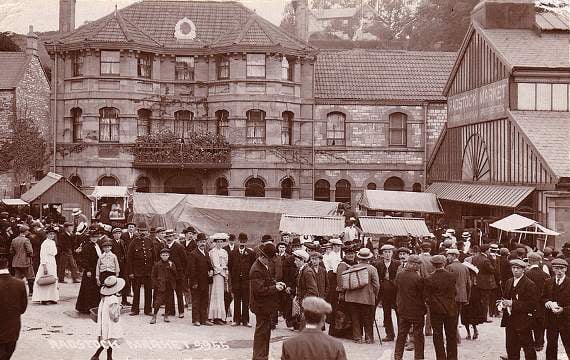
Somerset Coalfield Life at Radstock Museum opens its doors for 2018 on Thursday, 1st February, with new things to see and do.
The coal-mine attraction has been improved, with more rare mining artefacts on display courtesy of Francis Hillier, Chair of the Somerset and District Miners’ Welfare Trust, including one of the best preserved examples of a Guss and Crook, a Miner’s watch, an 1837 Miners’ Union Rule Book, coal from Norton Hill Colliery, and a miner’s beer token made for use at the The Dolphin Inn, Welton. You can also see in Francis’ collection a piece of shrapnel from one of five German bombs dropped late in the night on the centre of Radstock in 1940.
Did you know that a ‘monkey bag’ was a small cotton drawstring bag in which the miners carried their lunch to work? Children will enjoy finding some of these bags at the mine entrance and opening them to see what food there would have been inside. No one is sure why the bags were called ‘monkey bags’, but the miners hung the bags up by the drawstrings from the roof of the mine workings to prevent the mice, which lived in the mines, from reaching the food and eating it all! If you know why these lunch bags were called monkey bags, the museum would love to hear from you.
Visitors of all ages will have fun guessing what the smells are in the museum’s new ‘smell boxes’! These are smells from the past of Victorian Radstock; needless to say some are not too pleasant!
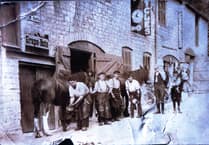


Upstairs in the museum is the new exhibition on the history of Downside Abbey. It includes objects, photographs and letters from significant moments in Downside’s history, such as a seventeenth century map, a portable altar used by one of the monks in the Boer War, and original photographs. To complement the exhibition, there is a talk by Downside archivists, Frances Bircher and Steve Parsons, entitled ‘The History of Downside in Pictures’ at the Somer Centre on Tuesday, 6th February from 7.30 p.m.
Dinosaur bones from a 140 million year-old Pliosaur, including a tooth and a paddle bone, are on loan to the museum from local, award-winning geologist, Simon Carpenter. For those of you who love art and local, historical scenes, the volunteers at the museum are delighted to have on display the original, intricate pencil and ink drawings by late local artist, Christopher Marshall, on loan from his family.
If you are a weekend visitor, from Saturday, 10th February you will be able to enjoy the museum’s new virtual reality coalmine experience, plunging down into the local mines and travelling back in time as you wind your way through a coalmine, seeing in full 3D what it might have been like underground in days gone by.
When you have taken in all the new things to see at the museum, you can enjoy refreshments in the newly decorated tearoom. All museum tickets and gift cards are annual, so you can return as many times as you like. The tearoom and shop can be visited by anyone, with or without a museum ticket.
Comments
This article has no comments yet. Be the first to leave a comment.