

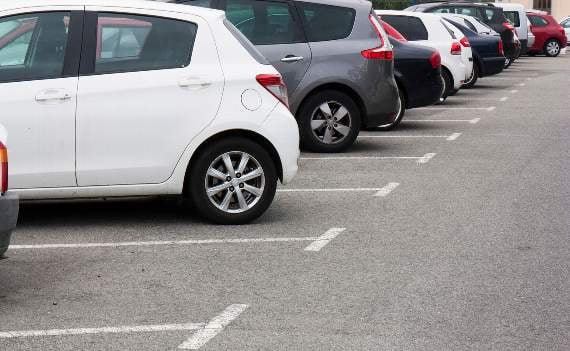
Bath & North East Somerset Council raised nearly £12 million from parking charges, permits and fines last year. After expenses were taken out, the Council was left with a surplus of £8.1 million from parking – money which has been branded a ‘stealth tax’ by motoring organisations.
The figure was up by a quarter compared to the Authority’s £6.3 million surplus in 2016/17. Councils across England made £871.5 million in so-called “profits” from parking in 2017/18, the highest amount since records began in 2008/09.
Driving organisations criticised rising surpluses across the country for leaving motorists with less money to spend. But B&NES Council said its income had been boosted by a greater number of transactions, not increased charges.
AA spokesman, Luke Bosdet, said: “The high cost of parking is sucking money out of consumer spending – money that could be spent in shops.
 Less than three in five A&E arrivals at Royal United Hospitals Bath seen within four hoursJust two-thirds of A&E arrivals at the University Hospitals of Bristol and Weston seen within four hours
 Marksbury community gets £13k boost for projects
 More than 150 people in Bath and North East Somerset without a home this Christmas
“Councils are increasingly reliant on their parking money to prop up their other services. In that respect, it’s a stealth tax. It should cover the cost of providing the service. What it has become is a massive source of income for Councils.”
A B&NES Council spokesperson said: “In 2017/18, the Council made a surplus of £8.1 million, from a total income of £11.9 million from parking-related activities. This includes income received from paid-for parking, permits (both on and off-street), penalty charge notices and other services provided to the public.
“The increase to the surplus from 2016/17 to 2017/18 represents a rise in the number of transactions within our car parks and at our on-street parking locations, and is not the result of any increase in charges.”
B&NES Council’s parking strategy, adopted in February 2018, set out how the authority would try to influence behaviours and travel choices. The spokesperson added: “This includes changes to parking charges, which is one of the main tools that local authorities have to change wider travel behaviour and achieve the Council’s transport policy aims of reducing congestion and improving air quality and parking management.
“In addition, a successful pricing strategy will offer choices to the customer, whilst reflecting the value of the parking provided. In locations of high prosperity, such as the centre of Bath, car parks are located on valuable sites and parking charges should reflect this and their convenient location.”
The Council is legally bound on how it spends any surplus and will use it to fund improvements to transport and transport-related schemes, such as safer routes to schools.
Councillor Martin Tett, Transport spokesperson for the Local Government Association, said parking income is spent on running parking services, with any surplus only spent on essential transport projects, such as tackling a national £9 billion roads repair backlog, and on other projects that benefit high streets and local economies. He said: “Councils are on the side of motorists and shoppers. They have to strike a balance when setting parking policy, both on-street and off-street, to make sure that there are spaces available for residents, high streets are kept vibrant and traffic is kept moving.”
Stephen Sumner, LDR
Comments
This article has no comments yet. Be the first to leave a comment.