

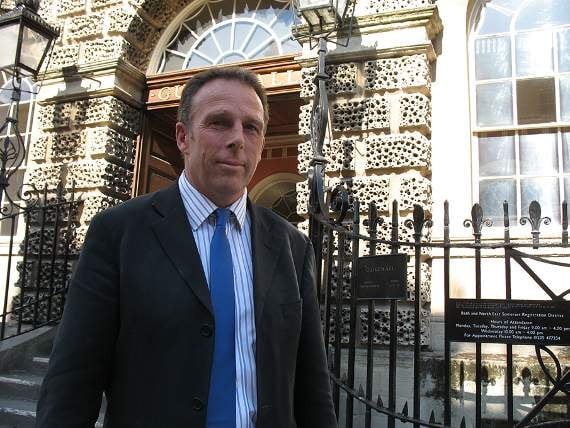
The leader of Bath & North East Somerset Council has warned that the authority is likely to increase Council Tax this financial year, saying “it wouldn’t be prudent not to.”
Despite delivering £30 million in savings in recent years and an ongoing programme of 300 job losses, the Conservative administration is still having to consider a tax rise as well as further cuts in 2019.
In an interview with the Local Democracy Reporting Service, Councillor Tim Warren and the Cabinet Member for Finance, Charles Gerrish, said the Conservatives have saved £30 million since taking office, but claimed the impact on the front line was hard to identify.
They stressed that more than eighty pence in every pound Bath & North East Somerset Council receives is now spent caring for the most vulnerable people – a figure that has climbed steeply in the last three years.



On the possibility of increasing Council Tax, Mr Warren said: “Council Tax rises are not something we consider lightly; this has been demonstrated by us delivering the lowest Council Tax rises for the last two years in the whole of the West of England. This has put us in a position where our residents pay the third lowest Council Tax in the entire South West.
“However, given the current financial pressures, we feel there is a good chance we will have to raise it, but until we have worked through the final budget details, this cannot be confirmed. We stay committed to delivering sound financial management for our residents to achieve our goal of long-term sustainability.”
He did not specify how much more residents might have to pay.
Mr Warren said his opponents could “stick the knife in” and criticise the cuts his administration had made, but he challenged them to come up with credible alternatives.
Councillor Warren said: “It’s easy to sit in opposition and say you should spend more money. You tell me whose care package to cut. Where is the money going to come from?
“We don’t want to make these cuts. It would be great if we could have another £50 million, but it’s not going to happen. We have a responsibility to balance the books.
“You can throw your toys out of the pram, or you can change how you do things.”
In the last three years, Children’s Services and Adult Social Care have leapt from 66 per cent of B&NES Council’s budget to 81 per cent. Mr Warren said that vast sum of money is probably only spent on five per cent of people – including children with special needs, particularly those whose needs cannot be addressed within Bath and North East Somerset, and youngsters who are in care. Adult social care encapsulates the elderly, but also young people with severe disabilities.
Mr Gerrish, the Cabinet Member for Finance and Efficiency, said he knew of one young man whose care package costs £100,000 a year. For someone classed as high needs, the figure could be three times that amount.
He added: “We’re a good local authority for special needs education. People move to Bath to attend our special schools and stay in the area. We’re a victim of our own success.
“Sooner or later, Government will realise local authorities have got to be funded to deliver the services we deliver. One of the pressures on children’s services is an unintended consequence of special education needs
reform – we’ve been hit with the costs.”
B&NES Council is cutting 300 jobs in this and the next financial year. When it was announced the Arts Development service was to close, it was described as one of several council services that will either be significantly reduced or cease completely.
Cllr Gerrish said: “They (the jobs) aren’t going all at once. It’s got to be done over a period of time to make sure it doesn’t impact on the service we provide. The changes are over a couple of years.
“Going forward, the financial challenge remains significant. There may be services that the Council has traditionally provided, that may have stopped elsewhere, that we have to stop.”
He argued that the savings the Council made over the past three-and-a-half years are “hard to identify” in terms of impact on the front line.
Mr Warren hoped for cross-party support for its plans to lobby Government for more powers to raise the money B&NES Council needs to be self-sufficient. He was disappointed that the Liberal Democrats abstained from the vote. They branded it “work in progress” that needed greater scrutiny.
The lobby document says the Council wants to introduce a tourism levy, as is common in European countries and other UK cities are calling for, and charges on short-term lets. It also wants to address the £5 million black hole in Council Tax from students occupying Bath homes.
Cllr Warren said the students pay enough, but the universities and landlords could do more. Mr Gerrish said: “Our main objective is to make the authority self-sufficient. We’ve got to do the best with what we’ve got and find ways of closing the gap. The lobbying document will help. We’re up for the challenge, but we need to be given the tools to do it.”
B&NES Council is already taking steps to generate extra income. It has set up a housing company, Aequus, to build homes, with the profits helping to fund council services. Mr Warren said: “It’s making money, and will make more money. It’s only small at the moment, but it will grow. Whoever is here in fifty years’ time will thank us for it.”
Mr Warren, who is also the deputy mayor of the West of England Combined Authority, said the body had been slow to get going, but it was opening up funding that B&NES Council could never have accessed alone. The latest funding is a £3.3 million boost for High Streets, which it will use in Midsomer Norton, Twerton and Milsom Street in Bath.
Speaking about the Council’s shelved controversial libary plan in Bath, Mr Warren said the project to integrate the One Stop Shop, currently in Manvers Street, into Bath Central Library would be looked at again. He conceded that the idea was “not universally popular” but said a lot of people would be disappointed in the decision.
Mr Warren praised Cabinet Member, Karen Warrington’s work to double the number of libraries across Bath & North East Somerset. Critics of the Modern Libraries programme, which is saving £350 million a year, said a room with books in does not equate to a library. Mr Warren said they have access to three million books, adding: “I don’t know what more they want.”
S. Sumner
Comments
This article has no comments yet. Be the first to leave a comment.