
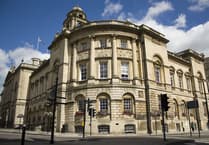
Once upon a time, well, eighteen months ago actually, when the Conservatives ruled B&NES, there was a feeling that management (Cabinet Councillors and top officials) was on top of the problems created by the long-announced budget cuts. Eighteen months after the Lib-Dems took over at the Guildhall, Bath there is a feeling that the subject of cuts is just being revisited after being put on hold for eighteen months.
B&NES has just published its Medium Term Service and Resource Plan covering the three years up to the end of March 2016.
It assumes that the cuts and changes resulting from Government policy, which B&NES has generally taken in its stride, to date, will continue. It implies the Council Tax freeze will not continue, unless the Government pulls some extra cash out of the hat.
Fifty staff, roughly 10%, are to go in just one area of the Council – Resources/ Democratic Services over the coming three years.
Reductions in other departments have yet to be announced.
Meanwhile, the implications for staff arising from savings are noted. The costs of severance will be budgeted for centrally and unions are now being consulted, together with the affected staff.
The Council now recognises the need to maintain a planned and phased approach to savings at a time when pressures are starting to require substantial and immediate cuts, the report states.
B&NES reserves and commercial income (property rental and the pump rooms etc.), together with the long-term financial plans initiated under the Conservatives put it in a stronger position than many Councils. However, in part because little appears to have been done in the last eighteen months, there is now a feeling that the Council is about to rush through cuts.
B&NES itself concedes that the situation is now more challenging with the need for a greater shift towards reductions in service provision to supplement efficiencies. The big bogeyman worrying the Council is the increasing costs of social and nursing care for the elderly and the under-65s requiring complex care packages. The costs run the risk of making Council budgets unviable over the next decade, claims B&NES.
Whilst the cost of care home fees etc. is going to be high, it is probably an exaggeration to say that the Council could go bust. There will, however, have to be lots of changes, with fewer services, tighter restrictions on eligibility for free services, higher charges for paid services and more taxpayers' money going to Local Government, either from local taxes or via the Exchequer. But before that position is reached, it is clear the Government intends to force local Councils to review all of their spending, become more efficient (a painful process) and get rid of those nice fripperies, e.g festival funding, which still survive.
Staff will have to pay more for their pensions, which won't be quite as good as they used to be and will have pay capped at 1% B&NES thinks meaning, like employees in the private sector they will get worse off year by year.
On 8th October 2012 the Government announced the provision of grant funding to support councils who freeze their Council Tax for next year (2013/2014) at the current level (i.e. a zero increase). The grant is equivalent to a 1% increase in Council Tax(approximately £700,000) and has been confirmed as payable for two years at present i.e. for 2013/14 and 2014/15.
It remains to be seen whether or not B&NES will take the government money and hold Council Tax or put up Council Tax by 2% and have £700,000 more cash to play with.
If the Lib-Dem controlled Council wants more than 2% it could have to hold a binding referendum to seek approval. If the electors reject the increase the Council will be in a worse state because it will have to make more cuts and have wasted months when it could have been implementing them gradually.
B&NES is still recruiting, according to its website on Tuesday it had 31 vacnaies notified, five involving salaries over £30,000. Interestingly there were three adverts for unpaid work, something that is likely to increase as places like smaller libraries are handed over to the local communities.