

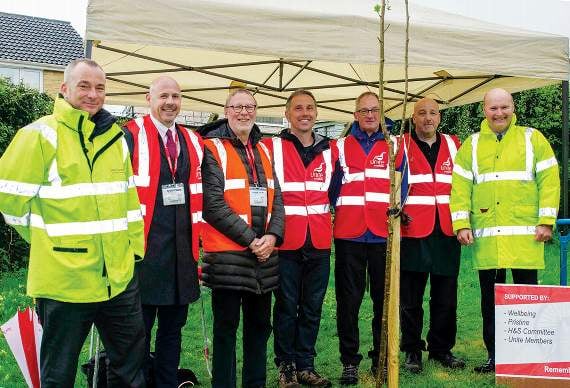
Sun Chemical and workers’ union, Unite, have come together to pay tribute to ten local miners who died on their site, at what was then Norton Hill colliery, 110 years ago. The ceremony saw the planting of a tree, and also marked forty years of the Workplace Safety Representative, whilst remembering those who have perished whilst at work.




Sun Chemical is now built upon the Norton Hill Colliery site, and what unfolded there has now become well-known across the area in local history. On 9th April 1908, at around 10 p.m., an explosion was heard at the colliery in Norton Hill. Amongst those that died was newly-wed, 25-year-old Gilbert Jones, who had been married only five weeks, as well as Ernest Jones and his sixteen-year-old brother, Stanley. The youngest victim was fourteen-year-old Harry Sage, a powder boy, who had only recently left school to work in the mine.
Rescuers, including the colliery owner, Frank Beauchamp, and a relay of doctors, toiled overnight to evacuate the trapped workers, risking their own lives. Many of them collapsed in the process, overpowered by toxic fumes, and just nineteen of those 29 workers in the mine were saved. Incredibly, more employees were not killed in the accident, thanks mainly to the heroic efforts of the rescuers and the modern cable system that allowed men to be transported swiftly to the surface in cages.
Following some poignant words from Tony Hulbert, a tree has been planted along with the burying of a time capsule. A commemorative plague and the laying of some beautiful flowers was followed by a minutes silence in the factories garden.
Those that attended included Tony Hulbert (Unite Regional Officer), Matthew Lanfear (Site Unite Representative) John Law (Company Director) Robin Hapgood (Site Manager) and representatives from the Sun Chemical Health and Safety Committee, Well Being Team, Manual Handling Support Group and Laboratory Development group. Nick Hall from Radstock Museum was also in attendance to mark the event that will be forever known in our area’s local history.
John Newport
Comments
This article has no comments yet. Be the first to leave a comment.