
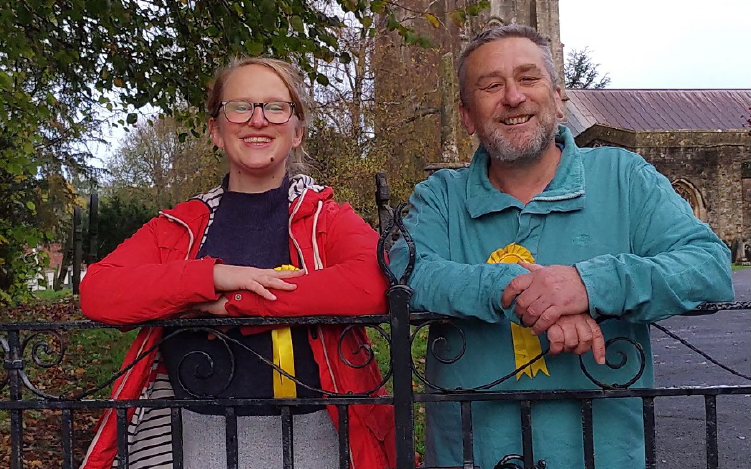
TRUMP’S war on Iran has pushed up petrol and heating oil prices. These higher prices are placing additional burdens on residents’ stretched household budgets. Our dependency on fossil fuels has put the environment and sustainability back in the headlines.


Councils have some impact on up to 80 per cent of an area’s emissions. The West of England Combined Authority (WECA) and Bath and North East Somerset Council both have a role to play in cutting fossil fuel dependence and reducing warming greenhouse gases through planning rules. These cover energy efficiency and solar panels (although Government is threatening to water down standards to promote more housebuilding), and support for retrofitting home insulation through to provision of electric vehicle charging points and supporting buses and active travel.
B&NES takes its legal duty to protect the environment seriously. Councils provide priceless green spaces for exercise and wellbeing as part of their public health roles and the social contract. Planting trees increases climate resilience by reducing flooding and overheating. B&NES has been working in partnership with groups such as Avon Needs Trees to double local tree cover and create new woodlands, such as the Great Avon Wood near Pensford.
A frequent, reliable bus service is vital for more sustainable travel. The X91 and 99 are now run by Eurocoaches as funding for the Chew Valley Sustainable Transport CIC has ended. WECA has told the bus operators that they can only stop at marked formal bus stops. This means the X91 cannot pick up passengers at Chew Lane near Highfield House, and customers must walk to the Chew Stoke stop. Inevitably not all Chew Magna users will do this. We continue pushing B&NES to improve the bus stops - it is ridiculous that a bus goes through the second largest village in the Chew Valley and does not stop.
One of the challenges we face is the never-ending expansion of Bristol Airport. They plan to swell further, to fifteen million passengers per year by 2035. This is unpopular - at last month’s Bus Engagement Event in Bishop Sutton, some attendees let out audible groans when the airport was mentioned. This expansion could be responsible for the equivalent of up to 484,000 tonnes of carbon dioxide damage by 2050 and bring ever increasing numbers of cars through our villages and lanes.
The airport wants larger, long-haul aircraft and needs runway lights up to eight and a half metres high with fencing and access roads on the ancient Felton Common, threatening yet more damage to our environment. We have both spoken in Council in opposition to further airport expansion, including David's successful motion for B&NES to continue to oppose more expansion. We urge all those opposed to further airport expansion and wanting to protect Felton Common and the Chew Valley to submit objections to the planning application on North Somerset Council's website when it becomes public (at time of writing, the online consultation was under development by North Somerset Council but should “go live” soon.)
Comments
This article has no comments yet. Be the first to leave a comment.