
AS we moved the dwarf conifer inside to decorate for Christmas, wild life began to emerge in the increased warmth. One shield bug and six lady birds in the first hour had to be rescued, writes Hazel Wedlake.
The broad beans, planted a bit early perhaps in October, had grown a foot high, battered by wind and attacked by frost, were still standing supported by a weldmesh tunnel which I use over most veg to keep the dog off. Still, new green shoots are coming up from below and show promise for the New Year. New shoots again in the greenhouse as iris, crocus and tulips emerged from their pots. A more successful year than last, with no damage so far from the mice, and in keeping the bulbs drier, none have rotted. Sweet peas have been sown and a bit more space for them tentatively negotiated in the garden room with the beekeeper, as the bulk of honey potting is finished now.
I had to keep a careful eye on varying temperatures in the greenhouse dropping from 9°C during the day to 0°C at dawn. When below zero was expected, I had to deploy my upgraded candle power heater! I had replaced my terracotta flower pot heater, with a rhubarb forcing pot (actually an old chimney pot), standing a three inch thick candle inside which lasts four to five nights — it gives off enough heat to keep the temperature just above freezing for some young plants which are vulnerable in pots.
I was encouraged to hear on ‘Gardener’s Question Time’ that mixing up your vegetable crops with other flowering plants or vegetables, can confuse the insect pests with the conflicting scents of the different plants.




My veg may start off in rows, but due to natural losses, not to mention the dog burying her bone mid row, they end up rather patchy and are quickly infiltrated by self seeding garden flowers or weeds. I shall have to console myself with this theory when I survey the chaos.
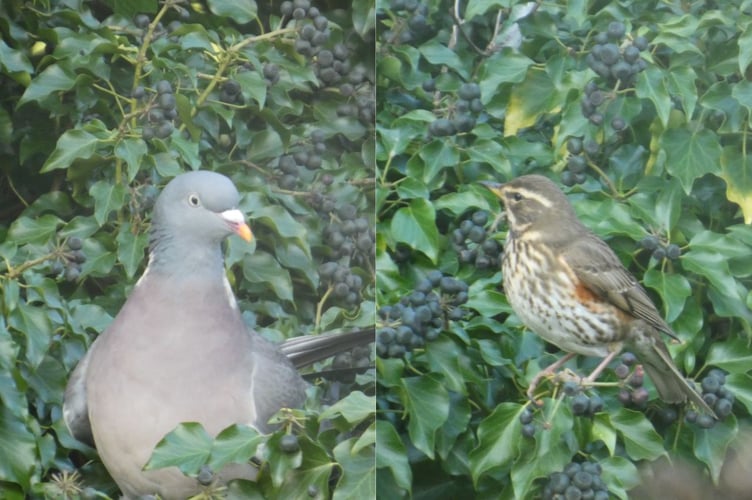
It was very satisfying at the turn of the year, to see blackbirds, pigeons, song thrush, and especially red wings feeding off the fat ivy berries. Growing up on a farm, it was always thought best to cut down ivy from trees in the past, thinking it would pull the tree down prematurely, but this theory is less popular now, and a good job perhaps as ivy can take 10 years to mature sufficiently to produce berries and provide shrubby protection for smaller birds and butterflies.
Large flocks of pigeons were not popular either, demolishing leafy crops. Whilst they may still be controlled by shooting, my son in Hampshire tells me he regularly sees a pile of feathers in the garden where buzzards or red kites have feasted off a pigeon. I have never forgiven the buzzards there for attacking the moorhens that used to frequent our pond.
The moorhens were so entertaining – scuttling back from grazing on the lawn, paddling furiously to their nest to check on their eggs. I loved them!
Comments
This article has no comments yet. Be the first to leave a comment.