
Dear Readers,
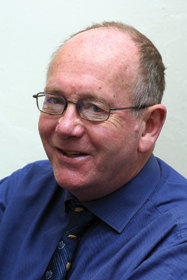
At the end of this week I retire from regular employment as the Editor of The Journal.
It has been an enormous pleasure and privilege to work on The Journal over the last 23 years. My colleagues, past and present, both in-house and at our printers, have been a joy to work with.
Our loyal advertisers are as much friends as business contacts and I will miss my contact with them. They are the people who make The Journal possible. Their invoices pay for all the costs associated with preparing, printing and distributing The Journal.
.png?width=209&height=140&crop=209:145,smart&quality=75)
.jpeg?width=209&height=140&crop=209:145,smart&quality=75)

Our distributors are the final link in the chain and whilst newsagents have declined over the years, other distribution points have taken their place. Their help in getting The Journal to you is much valued.
10,000 copies of The Journal were printed every week when I joined the paper. The edition was usually sixteen pages, printed in black and white. Today, we distribute 16,000 copies each week, 32 pages and in full colour. Our production has grown as more and more people pick up the paper.
The paper is popular because of its focused local contact and lively letters columns. We depend on contributors, both regular and occasional, to provide information on what is going on in the community. Local politics have also produced much interesting copy. Local politicians have, with only a tiny few exceptions, been helpful and courteous.
Local politics have changed greatly over the years. Wansdyke District and Avon County Councils were both swept away in Local Government reforms of the 1990s, although Avon lives on in many postal addresses. A more important change to Local Government was the ending of the committee system and its replacement with a cabinet of full-time, paid and pensioned Councillors. This has led to much more secrecy in decision-making and deprived ordinary Councillors of the chance to make a real contribution to decision-making.
Whilst B&NES Councillors are paid as never before, perversely, sometimes their quality has declined. Council press officers have, over the years, moved from providers of information to part of the opinion-forming process, always wanting to portray their Council in the best light and defend the interests of the corporate body as if it was a private company. B&NES Council is a public body which should be open and transparent, promoting justice and decency. Democracy, like markets, will only work with full information. Councils hiding the facts, often because of fear of litigation, do not help democracy. Overall, there are fewer characters in Local Government than previously.
The demise of Norton Radstock Town Council has seen a very positive growth in civic pride in Midsomer Norton and Westfield. Radstock will ultimately benefit, too.
Villages have always had that sense of pride, from Coleford to Chew Magna, they are real, living communities. Schools, shops, doctor's surgeries and churches all play their part in keeping the community together.
Local employment has changed dramatically – major employers have disappeared, yet the area enjoys relatively full employment rates. Major new housebuilding, from Peasedown to Paulton, has made the area more of a dormitory for Bath and Bristol than a place sustainably generating its own employment. The area is increasingly a commuter community.
The very first article I contributed to The Journal was on the history of Radstock Co-op (a series of three). This organisation continues to prosper. The second was shortly before I joined The Journal staff and was on the closure of Marcrofts Wagon Works in Radstock and the possibility of re-opening the railway line to Frome as a heritage railway. A great chance was lost there and the volunteers at Midsomer Norton South Station have shown what could have been done.
The railway land in Radstock remains undeveloped and whilst the economy remains flat with plenty of other housing sites available, nothing is likely to be built on the site any time soon. Much money and volunteer effort has been expended on creating a local cycle network, ironically blocked from maximum use by the Board of Directors of NRR, the owners of the Radstock railway lands. They have erected hoardings to keep the public off what is effectively public land.
This area has a great future, your Journal will continue to keep you in touch with everything which is going on. I commend its new Editor, Becky Brooks, to you. She is Midsomer Norton born and bred and knows the area well. She has been a member of The Journal team for the last eight years and will continue to provide you with news, views and information in the future.
I wish you, our readers, all the best for the future.
George Donkin