
On Friday evening, 17th June at 7.30 p.m., Rodney Cross will present an illustrated talk at St Peter’s Church, Camerton.


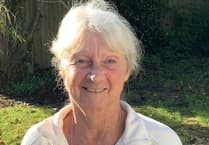

The basis of the talk will be In the Thick of It, a book that records the Life and Work of Dr Clara Cross, his late mother. Born Clara Dunbar Tingle in Sheffield, South Yorkshire, in 1900, the young Clara Tingle was destined for a distinguished career as a doctor, but as her son, Rodney, will describe, it was not at all straightforward, with numerous difficulties and prejudices encountered along the way. Growing up and attending school in Sheffield, life for Clara was seriously disrupted, as it was for everyone with the outbreak of World War One in 1914. Sheffield suffered from German bombs dropped from a Zeppelin in 1916, with Clara passing a cemetery that had been hit on her way to school. Sadly, there were many fatalities with rescuers searching for and recovering the dead and injured as she made her way to her studies. Surprisingly, Clara found these distressing sights did not affect her as they did her fellow students and in some way, endorsed her desire to choose the medical profession as a career. At the end of World War One, almost all doctors were men, with some returning from the battlefields, and to break through the prejudices that existed presented a huge challenge and required determined perseverence. The situation when applying for a medical scholarship was not helped by Clara’s physical appearance, as she was slightly built and quite short. In fact, just a girl. Fortunately, one male member of an interview board in Yorkshire was more enlightened and advised his fellow members to ‘Give the lass a chance’. They accepted this sound advice by awarding a scholarship to study as a Medical Doctor and Clara qualified in the early 1920s.
Practising at a hospital in Sheffield in the mid-1920s, Dr Clara Tingle, accepted a position as Locum Doctor at a practice in Treeton, some five miles from Sheffield where the doctor had been admitted to hospital seriously unwell. It was at this practice that Clara met the man who was to become her husband. This was Roland Cross and Rodney will delight the audience with the rather romantic details of their meeting. It is amusing that the chauffeur from the surgery in Treeton sent to the railway station to collect the Locum Doctor returned without his passenger and explained when questioned that a doctor did not alight from the train, only a young girl. The unfortunate driver could not imagine that this slightly built young lady was in fact the doctor.
After her marriage to Roland Cross (founder of Cross Manufacturing Company in Bath) in 1928, her distinguished medical career continued and Dr Clara Cross was the first woman to be admitted as a member of the Royal College of Physicians.
At the outbreak of World War Two, Dr Cross found herself being charged with the task of setting up the hurriedly built single storey wards at St Martin’s Hospital to receive injured service personnel from the battle front and during this time and after the war ended, she was responsible for the advances in blood transfusions. It is difficult to imagine during those early days the donor and recipient on adjoining beds with a tube transfusing the blood between them. There was also hugely important work carried out by Dr Cross to overcome the problems of the Rehsus factor, when an expectant mum with Rhesus Negative blood is carrying a baby with Rehsus Positive blood. Untreated, the baby will usually be born jaundiced.
Dr Clara Cross retired from her position as Pathologist at St Martin’s Hospital in 1965, but continued for many years working in General Practice. Clearly, this is an evening not to be missed when the story of this distinguished and remarkable lady doctor will be told. Coffee, tea and homemade cake included in the admission price will be served during the interval and further details can be obtained from Kathleen on: 01761 470606 or Cyril on: 01761 471785. All proceeds from the talk will be for St Peter’s Church. Cyril James