
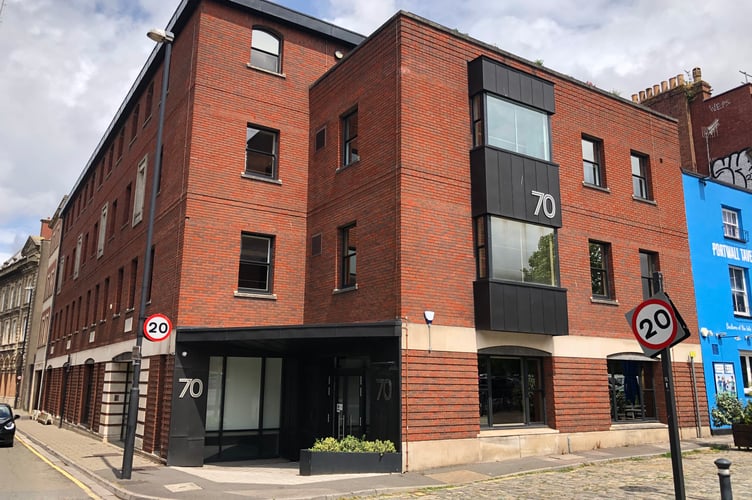
A £100 million project to create thousands of clean energy jobs, slash household heating bills, and boost net-zero industry and innovation in the West region has been quietly ‘canned’.
The West of England Combined Authority (WECA) committed £10 million in 2024 to kick start its Green Growth West Fund with the aim of attracting another £90 million from the public and private sector.
The 12-year programme across WECA’s council areas, including Bath and North East Somerset, was set to create up to 9,000 green jobs, generate £300 million turnover in small and medium businesses, save 230,000 tonnes of carbon, supply 36,000 homes with renewable energy, and reduce household bills by a total of £6 million.
Now, after anticipated investment failed to materialise, it has been scrapped entirely.


The money already specified for the project will be returned to a general pot for other, unspecified, initiatives focused on climate and nature, councillors on the authority’s overview and scrutiny committee were told.
The combined authority did not formally announce the news, instead it was revealed in a report to a meeting on March 23 which blamed the failure on ‘geopolitics and market dynamics’ that had ‘shifted in ways that have reduced current appetite for investment in the sustainability agenda’.
The report said: “Our values remain unchanged, we are still committed to exploring how best to support green growth across the region.”
WECA head of grant management and assurance Pete Davis told councillors: “The Green Growth West Fund will not now proceed owing to macroeconomic factors and changing market appetites, freeing up this for redeployment to pursue other growth strategy policies.”
Committee chairman Cllr Jerome Thomas said the withdrawal of the fund was ‘very disappointing’.
Cllr Thomas said a public finance bank, called the National Wealth Fund, which backs local government projects, had reset its terms for combined authorities since the business case was agreed.
He said ‘the goalposts were moved’, which was to blame for the fund being abandoned, along with changing market conditions.
WECA chief executive Stephen Peacock said: “When the committee approved the £10 million it was very much a cornerstone investment that needed to be matched by additional private sector capital and then subsequently further by public sector co-investment to enable us to collectively go and get private sector investment.
“We did talk about the design in the fund with the National Wealth Fund and closely with the local authority advisory arm who were very supportive.
“We were not making an assumption that it was definitely there but we were certainly making an assumption that we would need to find somebody of their scale to co-invest.
“The process resulted in a conversation at their investment committee.
“I understand that coincided with a new strategy in the National Wealth Fund which made it clear that their strategic direction is away from co-investing in funds now, toward investing directly in large national schemes, so, unfortunately, that meant they could no longer continue.”
Comments
This article has no comments yet. Be the first to leave a comment.