
A new report says that Covid has hit our most disadvantaged communities hardest - and warns the climate crisis will do the same.
The Vital Signs 2021 ‘Climate and communities’ report by Quartet Community Foundation was published yesterday on Thursday, 25th March. It examines how the climate crisis is already affecting local lives in B&NES and across the West of England and includes local and national data on energy and transport, food, weather and nature.
It also features local projects already taking positive steps to improve the environment and tackle climate change.
Bath area charitable organisations will be crucial in building a fairer, greener society.
.jpeg?width=209&height=140&crop=209:145,smart&quality=75)
The report highlights the important role that local charitable organisations in Bath and throughout the West of England are already playing as they work to tackle the impact of climate change on our communities.
Lucy Gilbert, Head of Policy at Quartet Community Foundation and the report’s author says: “It’s clear that, as with the Covid crisis, it’s those of us already facing disadvantage that are going to feel the worst impacts of the climate crisis.
“Our local charitable organisations will be frontline in responding to climate change because they’re on the ground, ready to act swiftly, as they’ve been doing throughout the pandemic.
“We want to support local action now that will help mitigate the local effects of climate change. There are some fantastic local initiatives working on this already, and now is the time to support them. We want to play our part by working with philanthropists and local organisations to support a fairer, greener future.
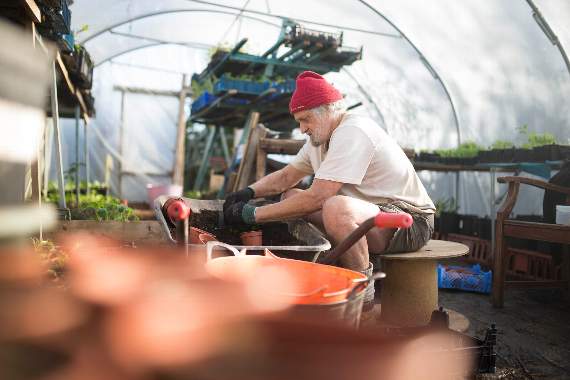
“At Quartet Community Foundation we’re already funding projects like Bath City Farm but we’d love to do more. The charity sector has been working flat out to support communities during Covid; we want to make sure they have the resources they need to help communities through the climate crisis too.”
Four things you may not know about climate change in B&NES and West of England:
• The five hottest years on record have all been in the last six years. In fact in the summer heatwave of 2019 Bristol’s road temperatures reached over 50°C, very close to their softening point of 56°C.
• In B&NES the lowest earning 10% of households are nearly twice as likely as others to live in energy inefficient homes. Living in cold homes wastes energy, damages health and increases fuel costs.
• By 2050 parts of North Bristol, South Gloucestershire and much of North Somerset may be below sea level, according to current projections.
• In our towns and cities, allotments and smallholdings are some of the most biodiverse habitats and can be crucial havens for wildlife.
The report can be found here: https://quartetcf.org.uk/report/
Comments
This article has no comments yet. Be the first to leave a comment.