.jpg?width=94&height=94&crop=1:1,smart&quality=75)

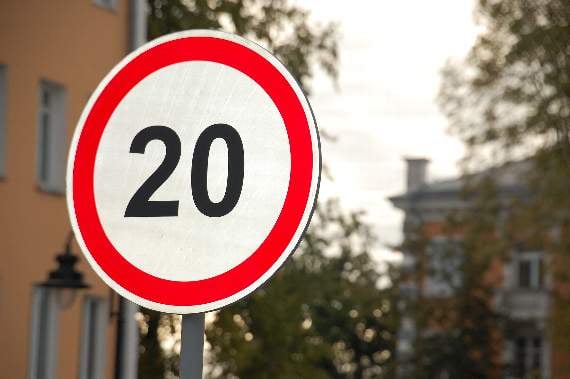
Bath and North East Somerset Council is to await a review by the Department of Transport before considering implementing changes to 20 mph zones across in the district.
The decision was made at a meeting of the Communities, Transport and Environment PDS Panel held on 17th July, as it considered a report into the subject, which looks at whether or not 20 mph actually makes our roads safer.
After some discussion, the Panel decided to note the report and accept that more data is needed over three years to provide more evidence. A revenue budget provision would be required to implement any changes, and the Panel decided it would await the outcome of the Department of Transport’s review. They will continue to consider specific applications for 20 mph schemes around areas such as schools, but have recommended that 20 mph signage be removed where it is illogical.
Cllr John Bull (Labour, Paulton), Chair of the Panel, said: “Speed limits are something which raise strong feelings for and against, and there is evidence on both sides as to their effectiveness. “Therefore, the Panel



advised waiting until the national assessment of 20 miles an hour limits is available but in the meantime, prioritising any new schemes outside schools where they are likely to be most successful.”
Following the meeting, local Lib-Dems, who introduced the 20 mph speed limit back in 2011, say that twenty is still plenty. Councillor Neil Butters (Bathavon South) commented: “Widespread 20 mph limits in residential areas were introduced by the Liberal Democrat administration after a long campaign and consultation showing support from local people. By lowering speeds on residential roads, we intended to improve road safety for pedestrians and cyclists, encourage more people to make short trips on foot or by bike, and improve quality of life.
“The safety aspect is crucial and is supported by the British Medical Association (BMA). A highlighted statistic is that a child hit by a car travelling at 30 mph has an almost 50% chance of dying; at 20 mph this drops to just 5%.”
Councillor Richard Samuel (Walcot) added: “We have reviewed evidence, presented to the panel, showing that there has been a reduction in speeds on residential roads overall since the implementation of 20 mph limits and that fewer people are driving at higher speeds of over 26 mph. Indeed, no ‘treated’ streets have recorded average speeds over 30 mph, which is good news and shows the limits are having an effect.
“Unfortunately, the statistics on accident rates were inconclusive due to the small amounts of data available. We will have to wait for more information before reaching any firm conclusions. I will be particularly interested to see the results of the DfT’s national survey, which may be more definitive.
“Suggestions that the Conservative administration had intended to roll back on 20 mph limits now seem to have fallen by the wayside and we hope that the new Cabinet member will show more enthusiasm for these safety measures. Lower speeds help to give the streets back to residents and the removal of the limits would doubtless be opposed by many.”
The introduction of 20 mph roads in the local area cost £871,000 from 2011 – 2016, with 1,499 local roads being lowered from 30 mph to 20 mph. It has been argued that 20 mph speed limits are proving ineffective, as drivers find it difficult to keep speeds at such a low level and end up ignoring limits altogether. Pedestrians expect cars to be travelling slower, which the report states could be a reason that accidents are up slightly. Should the limit be reversed, it could cost as much to put signage back to 30 mph.
Comments
This article has no comments yet. Be the first to leave a comment.