
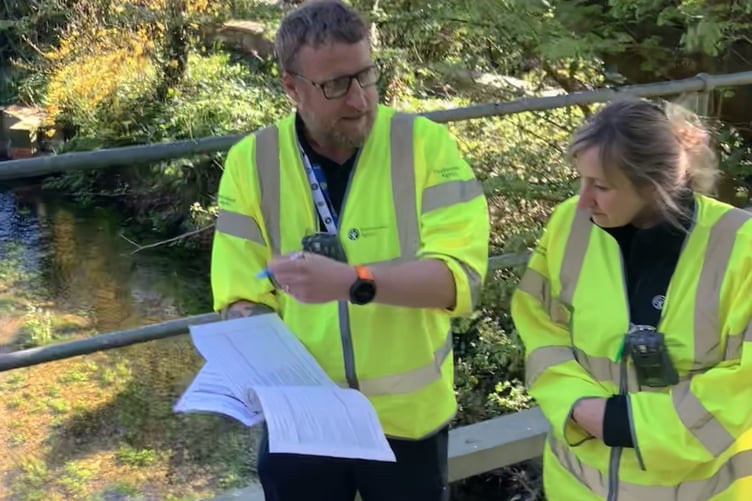
FAULTY monitoring and inconsistent maintenance have been flagged at Wessex Water sites by the Environment Agency.
Inspections revealed a range of issues in more than 790 checks of Wessex West Water assets during 2025 to 2026.
Environment Agency inspectors have been checking sites intensively with a record 10,000 inspections completed nationally in the past year.
The team responsible for Wessex Water assets increased its number of inspections by 90 per cent from last year in a bid to prevent pollution.




The monitoring found issues with the screening systems to prevent solid waste from entering watercourses, inadequate management of stormwater storage, leaking pipes and groundwater infiltration and inconsistent maintenance leading to blocked channels and overgrown vegetation.
After each inspection the Environment Agency issues a Compliance Assessment Report (CAR).
Wessex Water has been told to take more than 280 actions to comply with Environment Agency permits. Of the Wessex Water sites investigated, just 72 percent were found to be compliant with their permits.
Ed Lockington, water industry regulation manager for the Environment Agency, said: “Each inspection pushes Wessex Water to improve the key parts of its network we all depend upon, including the environment.
“A strong loop of inspecting, fixing, inspecting, maintaining is at work and will help Wessex Water improve and eliminate issues before they can harm the environment.”
Helen Wakeham, Environment Agency’s Director for Water said: “In our role as regulators of the water industry, we are changing how we operate, with better data, our largest ever enforcement workforce and greater powers to do our job effectively.
“Inspections are a vital preventative measure, with our teams nationally issuing over 3,000 actions to water companies, including repairing sewage works and upgrading their infrastructure.
“Together, this will drive meaningful improvements in performance, hold persistent offenders to account and ultimately create a cleaner water environment.”
Although many breaches in permit conditions were relatively minor, in terms of potential for pollution to occur, they are indicative of a water company’s approach to managing and maintaining their operations to protect the environment, the Environment Agency says.
Even minor breaches in permits must be actioned by water companies to ensure operations are compliant with permit conditions.
More serious breaches, where there is found to be a higher potential for pollution, can be referred for further investigation which could lead to prosecution or other enforcement action.
As well as rooting out operating issues, all the data and information gathered is enabling the Environment Agency, they say, to build better intelligence on water company operations, and trends in non-compliance, which in-turn will better inform its regulatory approach going forward.
The Environment Agency and Natural England have already secured £22.1-billion water industry investment commitments for the next five years to upgrade and improve infrastructure to meet tighter environmental standards. Wessex Water is set to invest £3.5-billion of this over this period.
Wessex Water was fined £11-million in November last year by regulator Ofwat after failing to operate, maintain and upgrade its wastewater network adequately.
Comments
This article has no comments yet. Be the first to leave a comment.