
Primitive Methodist not Wesleyan
Dear Editor,
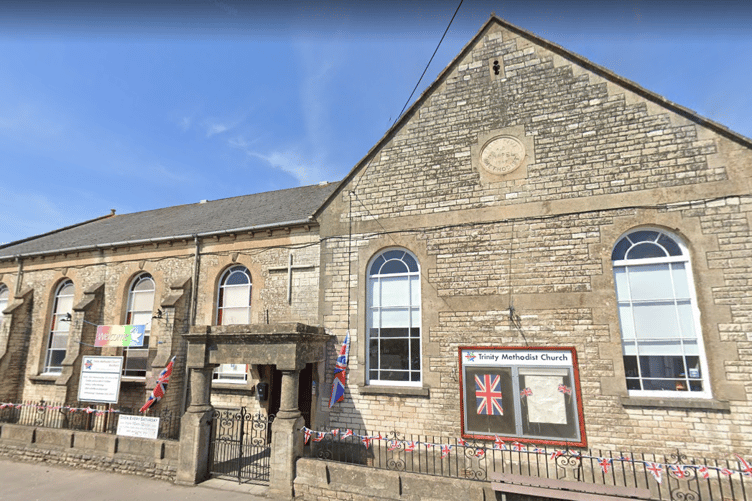
It was pleasing to see the photograph of Trinity Methodist Church church hall which was the original Primitive Methodist Chapel. This building was never a Wesleyan Methodist Church like the Radstock Methodist Church, or the Clandown chapel demolished by Bidwells Metals in 1988 John Wesley preached frequently in Bath, Paulton and Midsomer Norton, where he had friends, but only stopped once in Radstock, in 1788 according to his Journal
The undeniable evidence that it was is found in the cartouche embedded in the wall, The school room itself burnt down when a lorry crashed into it, and according to the Somerset Guardian, a 15 year old Geoffrey Fuller, now councillor distinguished himself in cutting off the fuel and rescuing the driver.
In the 1859s there were several waves of religious revivals and missionary out pourings. This fits the date I have for work beginning on the chapel in 1862 Although it was the Victorian sabbath miners used Sunday afternoons to drag white lias stones from the area where the allotments are, and build a simple chapel. They had been inspired by a charismatic preaching band from Frome. Westfield grew, and became industrialised, and so the present worship area was built at right angles. Further modern extensions were the vestry, toilets and kitchen, now heavily used for community evens and clubs.
The Primitive Methodist emerged as a separate denomination in the 1900s 1830s One difference was sociological. They were working people closely connected to the mines and later the railways, and wanted education as they could barely read but they could sing! At some point a quality organ was bought.
Shock horror! Women were allowed to preach and lead services not just women’s groups, and seem to have had some say in governance, which was grassroots up and very democratic. John Wesley, by contrast was accused to being more papal than the pope, and organised top down. He also contrived to have bishops ordained for mission in America because the US was cut off by the wars of independence. In 1864/65 General William Booth founded the Salvation Army in Nottingham because Wesleyans were looking askance at barefoot worshippers, Wesley believed Methodists should go back to the New Testament and follow its eaching literally. He even mad e his own translation from the Greek. Religous faith had to be personal, each individual decl ring from Christ. However the Primitives thought he has lost h is way, and went back to the earliest traditions, they thought.
All are welcome at Trinity Methodist Church, as the chapel was named in 2010, and grow in faith and love while joining the Methodist quest for social justice
Finally, Westfield is a thankful congregation. A plaque records that no church members died in the second world war and the carved woodwork expresses their gratitude that all the men came back
Dr Eleanor Jackson,

Curator of the History of Methodism in the Radstock Area, Radstock Museum 2018
Truth found on the end gable
Dear Editor,
I note from this week's Journal that the picture from last week has been identified as Westfield Wesleyan Methodist Chapel. Whilst the information regarding the history of the chapel is very interesting and informative there is one unfortunate error. The chapel was not Wesleyan but a Primitive Methodist Chapel. Note the plaque on the end gable of the original building. Perhaps for the benefit of your readers I may briefly explain.
John and Charles Wesley along with George Whitefield, all of whom were Anglican clergymen, met with others at Oxford University at what was known as The Holy Club in the mid 1730s. Their meticulous approach to life and their religious convictions labelled them as Methodical or Methodists.
Over a period of many years, John Wesley, although still an Anglican clergyman, traveled widely throughout the land and established many local groups or Methodist Societies who followed his teaching. In fact one of his very earliest (5th) was in Bath around 1740.
Over a period of years some dissatisfaction evolved over doctrinal and organisational matters and a number of different groupings emerged. One such was the Primitive Methodists, whose membership came principally from the working classes, and as such would have appealed locally to the mining community. Note that Wellsway pit was but a few hundred yards down the road from Westfield towards Radstock.
Other groups, such as the Methodist New Connexion (Revd William Booth whilst stationed at Gateshead with this group, took umbrage at the organisation , threw his toys out of the pram and subsequently formed the Salvation Army); United Free Methodists, Bible Christians and one or two other smaller groups flourished in various parts of the country. In 1907 there was a minor amalgamation forming the United Methodist Church, but this did not include the Primitive Methodists.
The Wesleyans did not initially call themselves a Church, but rather a Connexion and the Wesleyan Methodist Church did not officially become known as such until the late 1800s.
By the late 1920s however the movement towards unification as one Methodist entity began and culminated with the Methodist Church Union Act of 1929, which effectively came into effect in 1932. In reality old habits died hard and it would take a number of years for the effect of Union to be fully implemented.
I trust this helps in some way.
Kind regards,
Jeff Parsons
Radstock
What is going on?
Dear Editor,
At the end of last year, I optimistically believed that we might finally be seeing the light at the end of the tunnel for Midsomer Norton’s Town Hall project. Now, I fear that light is another oncoming train!
Papers published by the town council in November finally shone a light on the full costs of the project, reported at the time to have increased from £931,403.00 in 2023 to £2,476,905.41 in 2025.
Reading the minutes of the December town council meeting I can only conclude that the new year is going to bring the same nonsense as the last one.
According to the Clerk’s report, “the building was now connected to broadband”, which no one can use but presumably we are paying for and “the design for the new glass lobby had been finalised”, presumably by Roald Dahl, “with installation expected by the end of January 2026. The redecoration of the Assembly Room was scheduled to begin on December 4, and councillors would have the opportunity to review the colour scheme”, if they are up to the task!
However, what’s far more concerning is that “key works, including heating system flushing, BMS installation, flooring, and various finishing tasks were planned for completion before Christmas, with overall decoration expected to be finished by late January or early February.”
Have these things actually happened? If they are delayed, how much is this costing? When is this building actually going to open?
The minutes from December 1 state that “the next project meeting was scheduled for 8th December”, but at the time of writing, over a month after the council’s extraordinary meeting on December 8, no minutes have been published.
What is going on?
Yours,
Peter Marwood
Midsomer Norton