
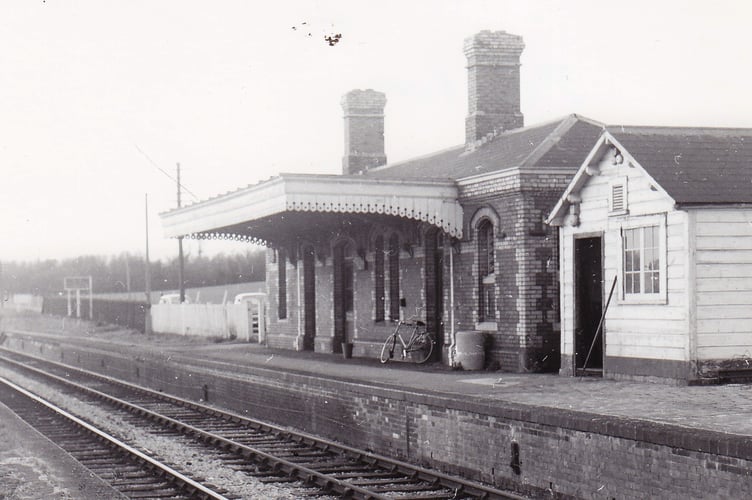
CAN you guess where this week’s Mystery Photograph was taken?
Each week, the Journal invites readers to test their local knowledge by identifying a historic location from days gone by.
Last week’s Mystery Photograph was taken at Oakhill Brewery in 1915.
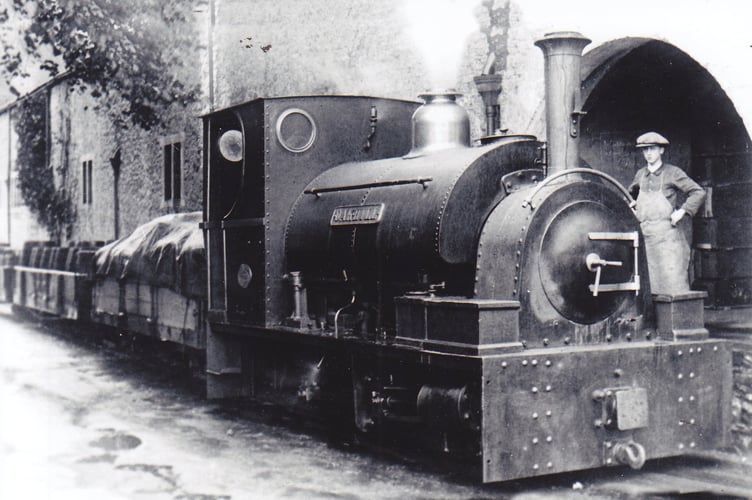



Congratulations to Nigel Shoosmith who guessed correctly. He said: “This week’s photo features the narrow gauge locomotive “Oakhill” which operated on the Oakhill Brewery Railway which ran from the Brewery to the Somerset and Dorset Railway station at Binegar.”
The locomotive “Oakhill” was one of two steam engines that operated on the former Oakhill Brewery Railway, a narrow-gauge line built to transport beer from the brewery in Oakhill to the Somerset and Dorset Railway station at Binegar.
The railway was constructed in the early 1900s to reduce heavy traffic on local roads, which had been caused by the brewery’s previous use of a road-going traction engine to move barrels of stout.
The “Oakhill” locomotive was built in 1904 by Peckett and Sons of Bristol. It was a larger steam tank engine compared with its companion, “Mendip,” and could carry around 340 gallons of water and a coal bunker. Both engines were painted in a distinctive olive green livery, highlighted with black bands and yellow and vermilion detailing.
The railway itself ran along a two foot six inch gauge track from the brewery directly to Binegar station, allowing barrels of stout to be loaded onto the mainline for distribution across the country. It remained in operation until after the First World War, with the tracks eventually lifted in 1921.
Although the main brewery buildings have since been replaced by modern housing, some of the malt-house structures survive and are now in residential use.
The route of the former railway can still be traced in places around Oakhill and Binegar, and photographs and records of the “Oakhill” locomotive remain in local archives, offering a glimpse into a unique piece of Somerset’s industrial heritage.