
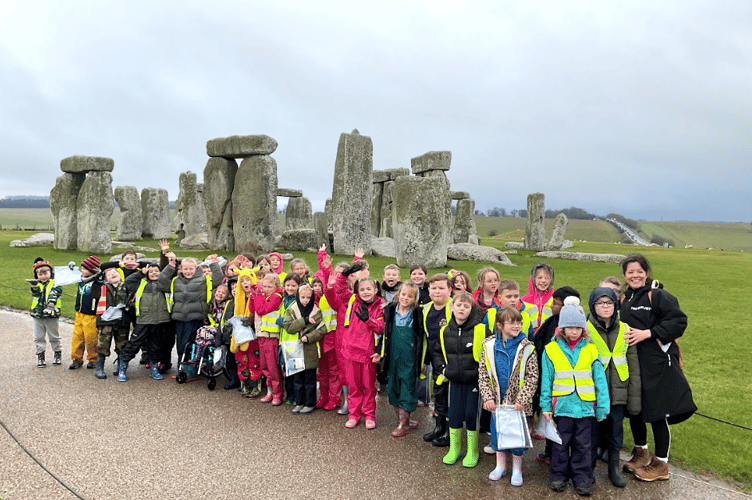
PUPILS from Peasedown St John Primary School have taken part in a special visit to Stonehenge on the Salisbury Plain in Wiltshire.
The Key Stage Two school trip gave the children the chance to learn about the monument’s history, and the significant role it plays as one of the UK’s pre-historic sites of interest. More than one-million people visit the site each year.
School headteacher, Ruth Noall, said: “Our Year 3 pupils braved the rain last week to visit Stonehenge with smiles and determination. Their curiosity and resilience shone through in buckets as they walked across this ancient land, eager to learn and explore despite the weather.”
Work began on Stonehenge about 5,000 years ago, but it was built in stages over many years. The stone circle dates from about 2500 BC, in the late Neolithic period. The Stonehenge monument was gifted to the nation in 1918, and has been managed and conserved by English Heritage ever since.



There’s much speculation as to Stonehenge’s purpose but the fact that the sun rises over the Heel Stone on the longest day of the year (summer solstice), and sets over it on the shortest day (winter solstice) suggests that it was a prehistoric temple aligned with the sun’s movements.
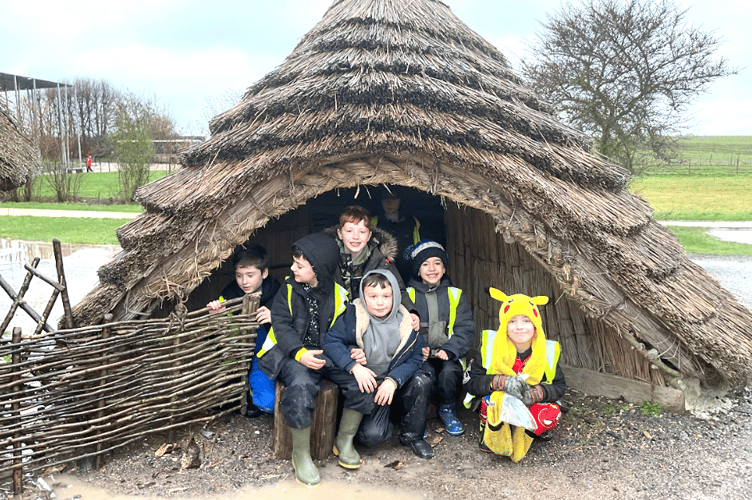
The world-famous Stonehenge has inspired people for thousands of years, and the pupil’s trip was no different. The children explored the site including the neolithic dwellings re-created by English Heritage more than a decade ago.
The headteacher added: “Our visit to Stonehenge helped our pupils learn more about our area’s history and what significant events happened here thousands of years ago.
“They asked thoughtful questions and pondered the mysteries of Stonehenge with great enthusiasm. It was a joy to see their interest, teamwork, and positive attitudes throughout the trip.
“We’re grateful to the team at English Heritage for making us feel so welcome.”
An English Heritage spokesperson said: “For many children, a school outing is the only chance they get to discover the very places where history was made. Visiting these places, touching the same stones, seeing the same sights and listening to the same sounds as those who made history is the best way to bring the subject to life.
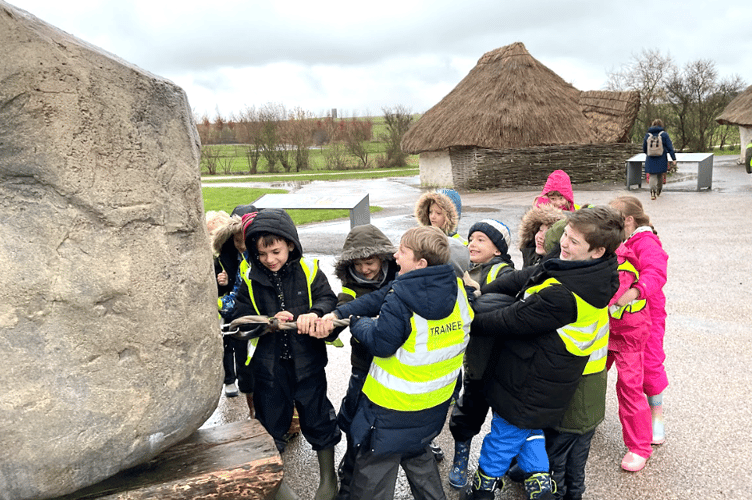
“Learning about the Neolithic period in a classroom can never offer the same depth of understanding as visiting Stonehenge, seeing how Neolithic people lived and handling objects and tools.
“And the benefits extend far beyond the topic being studied. A school trip to one of our sites can have a lifelong impact on children – it can broaden their horizons, develop their sense of self-worth, enable them to strengthen their relationships with teachers and peers, and so much more.
“As a charity, one of our main purposes is to provide everyone with memorable learning experiences. Our educational visits are a vital part of this. We are one of the only paid-entry providers in the UK to offer free school trips and we do this because we want to instil a lifelong love of learning in every single child.”