
Last week, Midsomer Norton Town Council signed an historic agreement to purchase twenty acres of land which would form a new Town Park, subject to approval from B&NES Council and the agreement of planning permission for 35 new homes at the Flower and Hayes development at the eastern end of the site.


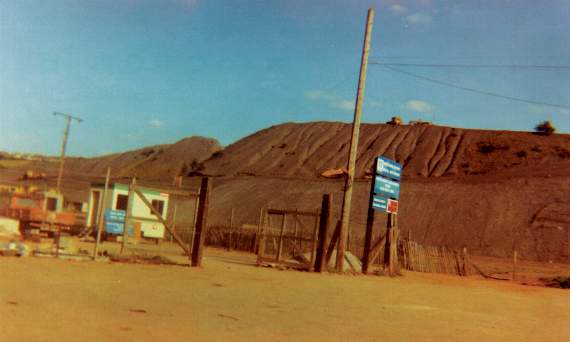
This is a long overdue and most welcome result for Midsomer Norton resident, Peter Rutter, who was once the Chairman of the ‘Railway Park Committee’ formed in the early 1970s, around forty years ago, to originally create a mile-long linear park for residents of Midsomer Norton, Radstock and Westfield at the old Norton Hill Colliery. The idea at the time was to either raise enough money to buy the land and develop it with the help of the community, before handing it back to Wansdyke District Council, which would also take on the liability, or to put pressure on the Council to buy the site, protecting it from development in future.
Despite knowing that the Council did not have the money to provide a park, Mr Rutter and the committee, which involved members of the community, such as schoolteacher and local historian, Chris Howell and solicitor, Edward Hallam, hoped that the land could be developed as green space for the public’s enjoyment, encouraging wildlife, and planting trees and shrubs with a space for children to play, with seating areas and a sensory, scented garden. Trees were being grown in preparation at Somervale School to plant once the land was acquired and local schools were on standby to plant alongside organisations such as the Forestry Commission.
At the time, there were public meetings, petitions, letters to the press and debates about the cost, with a Midsomer Norton Managing Director arguing that the costs could be around £60,000, a burden falling on the ratepayers of the day. The National Coal Board had offered to sell 27 acres of land at the site for a nominal sum, but this had to be accepted by Wansdyke District Council. The NCB at the time was under heavy criticism for not redeveloping industrial areas and the local tips, or ‘batches’, as we know them today, particularly after Writhlington and Kilmersdon collieries closed in 1973. Such sites were once labelled ‘monuments of disaster’ in the local press and there was much debate about what to do with them. Overall, though, there was a call for local authorities to reclaim these sites and use them for the best interests of local people.
The idea did have its supporters, even on the Council, with late Labour Councillor, Mrs Betty Perry, documented as being behind the scheme. In a letter to Mr Rutter, Lord Hylton also voiced his support and offered a possible extension of the park at the Radstock end, involving land which he owned. Quoted in the Somerset Guardian, committee member, Mr Hallam, said the idea “May be one of the most remarkable, charitable and community rehabilitation schemes in the country.”
Find out about planning applications that affect you by visiting the Public Notice Portal.
The Railway Park Committee did not have an easy ride, however, and Peter Rutter admits that the idea, in the end, ‘fizzled out’, despite public support. He said: “At one point, people were even trying to send us money – but at the time, we didn’t need money, we needed ideas and the Council to act. They did, however, put pressure on the Coal Board to regrade the tip, so that was something at least. But in the end, it ran out of steam – we were in the full bloom of Thatcherism and the money just wasn’t around.”