

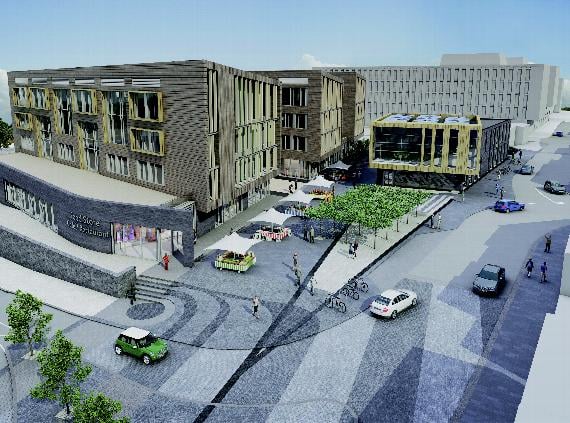
Bath and North East Somerset Council has thanked residents, shoppers, workers and businesses for giving their views on the experimental one-way trial on Keynsham High Street.
A total of 1,559 responses were received to the public survey questionnaire, one of the highest responses received in any recent Council consultation in B&NES. Out of this, 53% of respondents stated they thought the one-way trial should be continued in its current form or with specified improvements, while 8% were unsure or had no opinion, 39% of respondents thought the one-way trial should not continue.
Last year, the Council launched a one-way trial through the centre of Keynsham. This approach was in response to public consultation on the Council’s Placemaking Plan and the Keynsham Transport Strategy, which recognised local people’s desire to reduce traffic on the high street and improve the pedestrian experience.
The purpose of the trial was to evaluate whether a one-way High Street could work in terms of traffic around the town centre, and to consult the public and businesses on their views.
Between January and March 2018, the Council interviewed businesses, conducted on-street surveys and spoke to stakeholders about the Keynsham High Street experimental one-way trial. An online survey also ran alongside this.
In addition to over 1,500 people completing the survey questionnaire either online, on street or at the library, over 100 businesses (80% of businesses in the town centre) returned a business survey about the trial.
Workshops were held with the Accessibility and Active Travel Forum and the Keynsham Neighbourhood Plan group. The full suite of consultation results are published on the Council’s website, and can be found at: www.bathnes.gov.uk.keynsham
At the Keynsham Town Council meeting of 20th February, Councillors resolved that the overall impact on the environment was positive; that the trial be extended to conduct further air quality and footfall monitoring (both are now underway); and suggested highway design changes are addressed if the scheme were to be made permanent.
Monitoring data published as part of the consultation on the trial showed a clear improvement in air quality, with reductions of 22–47% during the period of the trial, the highest reduction can be seen on the High Street itself. All locations surveyed the levels of Nitrogen Dioxide, which are now below the national high risk level.
Cllr Mark Shelford (Conservative, Lyncombe), Cabinet Member for Transport and Environment, said: “We’d like to thank everyone who has given us their views on the High Street. We’ll be studying the feedback we’ve received carefully and looking at the impact the trial has had on air quality, traffic, footfall and parking before making a decision on its future. In the meantime, we’ll continue to monitor air quality and pedestrian movement in and around the town.”
B&NES Council’s Cabinet Members are due to make a decision in the summer about the future of the High Street, and whether further investment will be sought for Keynsham Town centre.
Comments
This article has no comments yet. Be the first to leave a comment.