

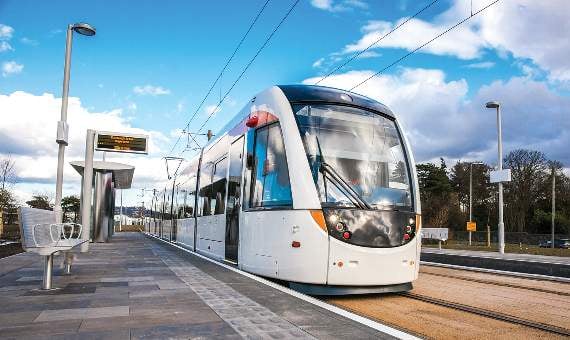
A £450,000 investment in studies to get Bath moving has been hailed as a shot in the arm by campaigners who want to bring trams back to the city.
Bristol and Bath Trams Chairman, Dave Andrews, said reviving the network was the only effective way to tackle congestion and attract more businesses, and argued it should expand to Radstock and other Somerset towns.
The West of England Combined Authority study will run alongside a £1.95 million project to assess the feasibility of a mass transit system between Bristol and Bath, that will again consider the use of trams. The scheme aims to prompt a “step change” in how people travel, but could cost £100 million to draw up plans before any construction work begins.
Speaking after last week’s meeting of the Bristol and Bath Trams group, Mr Andrews said: “This is excellent news and we hope that the study confirms what we have been promoting – i.e. a tram network – on the basis that buses or busways have never solved a traffic problem in any British city.
 Thousands of ultra low emission vehicles registered in Bath and North East Somerset – as campaigners group call for more equal access across UK
 Public Notices: Planning applications in Bath and North East Somerset
 Food hygiene ratings given to five Bath and North East Somerset establishments
 Rise in hospital admissions for stress and anxiety in Bath and north east Somerset, Swindon and Wiltshire
“Car drivers simply will not use buses, as they do not offer the required quality of service, in terms of comfort, prestige, reliability, that a tram can.
“Numerous cities in Europe have a tram system; including historic cities, and those smaller than Bath, where it is obvious that only a tram can deliver less traffic congestion and commercial regeneration, and it is amazing that a high profile heritage city such as Bath does not have one.
“Ultimately, we need Radstock and other Somerset towns connected by light rail/tram to the Bath-Bristol network to enable people from out of the cities to get to work, on time, reliably and at not excessive cost.”
The funding for the studies will be delivered over three years, and WECA agreed the first tranche at a meeting last month. In 2018/19, the mass transit scheme has been allocated £150,000 and the Bath transport study £50,000.
WECA Mayor, Tim Bowles, told the meeting: “An enormous amount of work has been carried out on this for a long time. I’m very happy to move those recommendations.”
B&NES Council Transport Chief, Councillor Mark Shelford, shared news of the funding at last week’s meeting of the Bristol and Bath Trams group. A WECA report said it will work with B&NES Council officers to draw up the Bath transport study. They will update the authority’s 2014 ‘Getting Around Bath’ strategy and establish the “root causes” of the transport issues.
However, not everyone believes in the idea. Sir Peter Hendy, the Bathonian head of Network Rail, said if Bath cannot prioritise buses, “it has no hope of digging the streets up and excluding cars from parts of the city”.
James Freeman, the Managing Director of First West of England, told a conference that buses should be prioritised.
Stephen Sumner, LDR
Comments
This article has no comments yet. Be the first to leave a comment.