
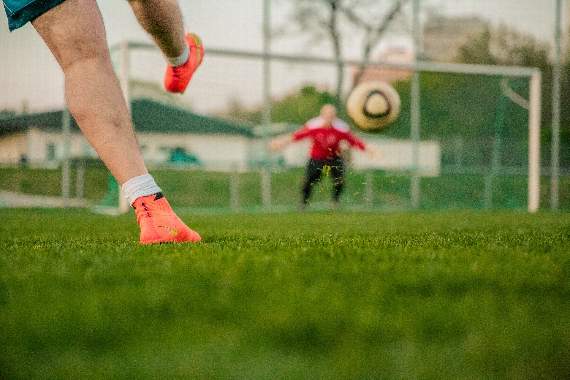
Last month The Journal published the first in a series of articles debating the Digital, Culture, Media and Sport Committee’s public consultation on the survival of community sport.
The DCMS Committee wants to identify specific actions the Government can take to guarantee the future survival of the community sports sector.
Local sports enthusiast, Dave Wilkinson, who has been closely involved in football since the 1960’s, has shared with The
Journal the submission he made to the DCMS Committee, based on his experience of dealing with the Football Association.


This week concludes our series of articles chronicling Dave’s submission, by considering the question of how much elite professional sports should support the lower leagues and how Government should make this happen.
Dave writes: ‘First, we must define what “elite” sport actually is. Football has allowed this definition to permeate down to the National League, but that does not mean that it should be considered “elite”.
‘Ultimately, the ability of the professional game to support the lower levels of the game depends entirely upon how profitable they are. Outside of the Premier League, it is very difficult to see how football clubs can be relied upon to invest in the grassroots of the game. If such funding were to be forthcoming, it would be more equitable if it were to be distributed to the grassroots via the local co-operative networks, described previously.
‘Presently non-league clubs that want to develop facilities and increase teams are reliant on financial support from organisations such as Sport England, the National Lottery and the Stadium Improvement Fund, which all function within FA boundaries, why? Surely a more commercial approach to funding distribution would ensure clubs grow organically and are not ‘chasing a dream’ that may be unsustainable.
‘In the event public money is to be invested to secure the long-term viability of the lower levels of the game, the Government should only intervene on the basis it gets meaningful commitments from the “elite” clubs to adopt financial best practise, including open book accounting and an improved fit and proper persons test regarding ownership, not run by the FA, but via an independent organisation.
‘Her Majesty’s Revenue and Customs is the primary vehicle through which Government can hope to impact individual football clubs, be they amateur or professional. Every professional football club should undertake an annual financial sustainability assessment.
‘If wealthy individuals wish to make money out of footballing investments, then their practices should be scrutinised to ensure that the game is not being abused and the long-term stability of clubs put at risk. In terms of non-league and grassroots football, it is important for Government to recognise that many of these clubs are run by volunteers who may not have the necessary skills or experience to meet extensive financial controls. However, this does not stop clubs spending well beyond their means in the pursuit of short-term success. League administration should be strengthened to ensure that clubs’ financial behaviour is scrutinised, at least in part. Again, HMRC should also have a role in ensuring the clubs paying their players expenses do so up to a reasonable limit and that players receiving more than this limit are put onto contract.
‘In this way, clubs will be forced to consider their own financial viability.
‘If funding from organisations like Sport England, the National Lottery and the Stadium Improvement Fund were channelled through the local co-operative models described earlier, this would devolve decision making and cut out the need for the FA’s bureaucratic structure.
‘The English Football Association has, for a long time, resisted and fudged around the questions raised by politicians about their governance of the game, claiming that any interference from Government in their running of soccer in England will result in sanctions from FIFA.
‘The UK Government should not only seek to bring change to the English FA, but should also lead other countries in seeking to change FIFA.’
Comments
This article has no comments yet. Be the first to leave a comment.