

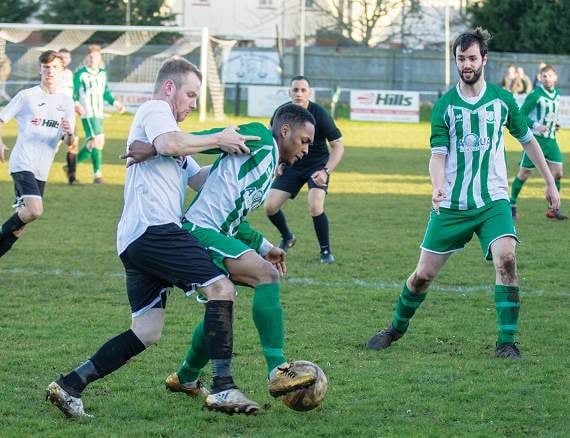
The Football Association have set out their vision for restructuring non-league football. The FA’s aspiration is to create a “pure pyramid” competition, from the National League to County football, but where does this leave Toolstation Western League Clubs, like Radstock Town and Welton Rovers?
The FA’s re-organisation programme has been underway for some time with two sides, rather than one, promoted out of the Western League following the 2017/18 season, and two more “laterally moved” from the First Division into the Hellenic League.
This season, Street opted for voluntary relegation from the Southern League, after only one season out of the Western League, citing a lack of volunteers to “cope with the demands of Southern League football”, whilst Almondsbury, moved out of the Western League only last season, were laterally moved back into the First Division for the start of the 2019/20 campaign. Clearly all is not going to plan.
Next season, Welton and Radstock fans won’t be making the familiar trip to Chard, as their League status has finally been revoked due to long-standing ground grading issues. Yet Chard aren’t the only collateral damage caused by the FA’s restructuring exercise. First Division runners-up, Cheddar, were only denied


promotion to the Western League’s Premier Division on basis of their points per game performance compared with teams in other Step Six leagues, the level at which the Western League First Division sits in the FA’s pyramid structure.
Had the Cheesemen been more successful, they would have presented the FA’s bean-counters with some seriously creative accounting, with Tavistock, Exmouth, Keynsham and Street all due to join the Premier Division and only Willand, Hengrove and Shortwood scheduled to leave. Even without Cheddar’s promotion-winning form, Chipping Sodbury still needed to be shunted out of the Western League, so rather than promotion or relegation, is the process of “lateral movement” the main threat to sides remaining in the League?
If geography is the key driver behind the FA’s plan, then this postcode lottery is likely to safeguard our local sides. Both with BA3 post codes, Welton and Radstock are nestled in the Western League’s heartland, far enough south of the M4 and just west enough of the Wiltshire border, to be out of the lateral line of sight.
The Western League has seen an expansion into Devon, with Plymouth Parkway and Buckland Athletic joined next year by Exmouth and Tavistock. Yet this expansion into the west potentially creates pressure on the League’s eastern border. When the FA roll the dice next season it will be interesting to see what fate awaits Clubs like Calne, Devizes, Westbury and Warminster.
For the FA to look at the landscape of the grassroots pyramid is entirely reasonable. Yet the process by which clubs find out that they will be playing in an entirely new league, removing historic derby matches from the calendar and potentially increasing the distances they are expected to travel without any consultation, cannot be right. Many fans will only find out about these new arrangements when they are released to press, only a matter of hours before the clubs themselves are notified.
The uncertainty of these uncertain times is only made more uncertain by the FA’s plans for promotion and relegation next season. The FA have already stated that “In 2019/20 Step Five (Western League Premier Division) will be required to promote more Clubs than usual”. Yet the Lord giveth and the Lord taketh away, as Step Six is set to be reduced from twenty to seventeen divisions, raising serious questions as to where the lesser sides at that level are likely to play.
Indeed, there is even a question mark hanging over which leagues will be running the new structure at Step Six, with the FA seeking “expressions of interest” to run fifteen of the new divisions, as two have already been allocated to the South West Peninsula League.
Clubs moved without any say in the matter, participation in men’s eleven-a-side football in decline, a shortage of volunteers and leagues asked to reapply for their own territories; the challenges faced by the grassroots game are starker than they have ever been.
Yet the greatest injustice is the one suffered by those who have given a lifetime of service to a sport they love. The Club chairman who mows the pitch, takes the ticket money and runs the bar. The volunteers who don’t take a penny from the game, yet when it comes to buying raffle tickets, they are always first in the queue, despite the fact they already bought the prize. Is it too much to ask them what they think?
For a game based on the order and certainty of the fixture list and the League table, it is remarkable that those administering grassroots football are being asked to handle so many agents of chaos, not because of outside influences such as recession or war, but because the FA has chosen to throw the cards in the air and we are all waiting to see where they land! Ian Nockolds