
IN December plenty of small birds came to the all-year round seed feeder with the glut of hedgerow berries still barely touched, writes Hazel Wedlake.
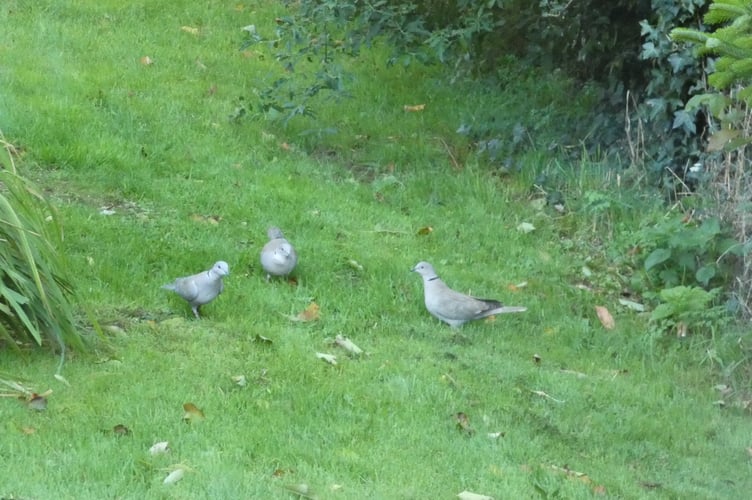
Bluetits, great tits, long-tailed tits, chaffinch, nuthatch, and even robin had a fast snatch at the seed. I love the gang of long tailed tits, so dainty and prettily coloured with their almost blush pink bodies, striking black wings and tail so long. The greater spotted woodpecker can dominate the feeder whilst smaller birds wait in the bushes, but a trio of collar doves, fly in more gracefully, ballerina-like to feed on the ground.
I saw a hen blackbird in the autumn, taking turns with the robin (bold blackbird!) to feed off mealworms, but I’ve not seen any since.



Chris Sperring tells us that we usually have blackbirds coming in from Scandinavia in the winter to our warmer climate,but the rise in temperatures there and plenty of food, has delayed this usual migration.
We have a resident pheasant, jays and magpies, jackdaws, rooks, crows, ravens and buzzards around the orchard all making a lot of noise in the sky above, I assume in a territory dispute or some such disagreement. Meanwhile, down at Chew Valley lake, by the end of November, the water had crept back up to the edges, to cover the green field like expanse we’d become used to.
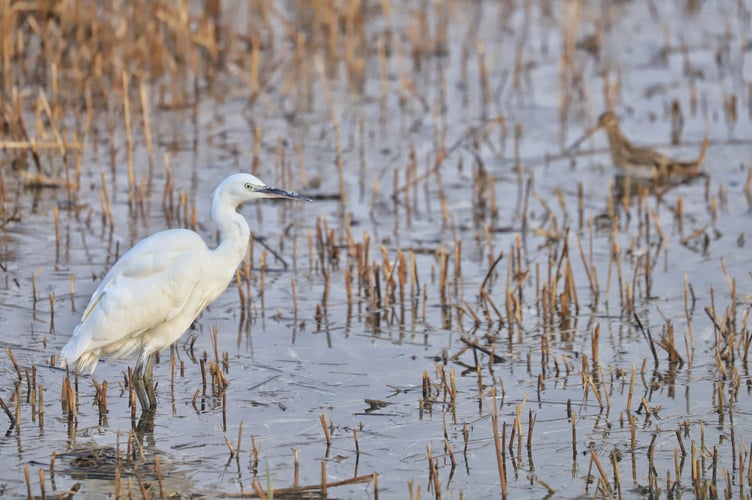
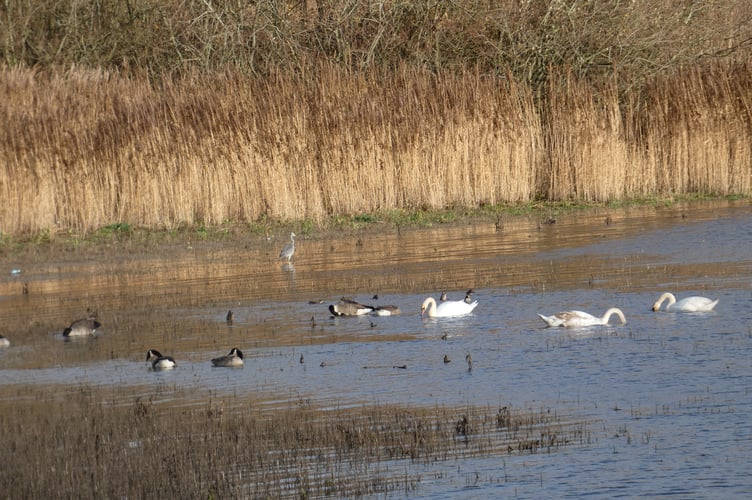
It amused me to see a great congregation of waterfowl perched on the old road still visible across the lake - the birds observing people on the roadside layby, observing them. Then one day they were all around the edge of the water in great numbers. I consulted a bird-watching friend who explained. The Herons Green pool on the opposite side of the road had flooded, and water needed to be pumped back to the main lake. With this came hundreds of little fish – a bonanza for the water fowl. My friend counted around 40 great white egrets, 20 little egrets and several cormorants all making the most of this unexpected feast. As the rains filled the lake, the remaining fish dispersed and so did the birds.
I find the winter months difficult, but promise of spring is evident in the bulbs germinating in the greenhouse, and so far, not attacked by mice. All vents are closed overnight to keep them out.
Sweet peas, sown in the winter would also have to be protected from mice, and pinched out early in spring to make them bushy, although the mice might make a good job of pinching them out, but they always overdo it I find, usually going right down to soil level. I have a hundred or so perennial cuttings, which need frequent checking too. They may dry out, or you may over water them because you didn’t bother to stick your finger in and see if they felt damp or dry, and all that potential is wasted. They really need a lot of attention but spring is a long time coming I find, and so indoor gardening is the answer.