
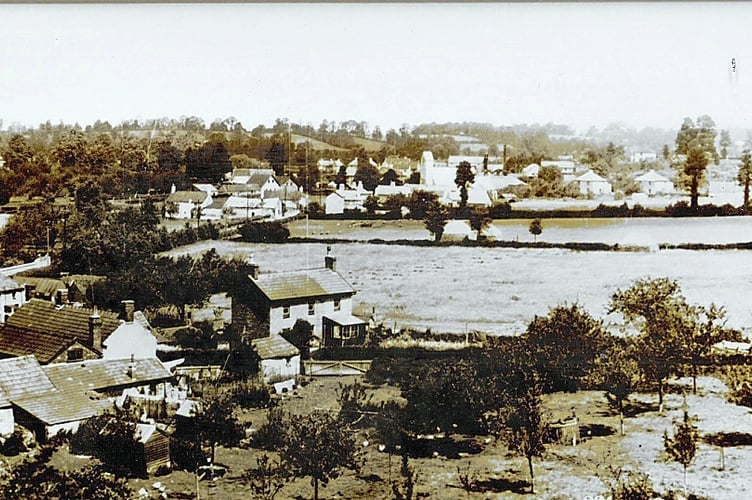
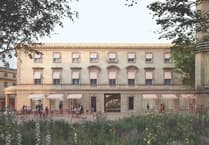
CAN you guess where this week’s Mystery Photograph was taken?
Each week, the Journal invites readers to test their knowledge by identifying a historic location from days gone by.
The previous Mystery Photograph showed Monkton Combe GWR station on the Camerton Branch, pictured around 1920.
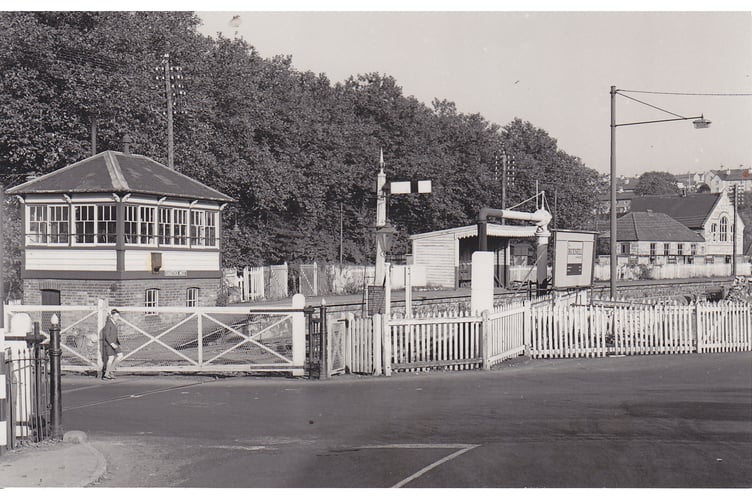

Monkton Combe GWR station was one of several small stations on the Camerton Branch, a Great Western Railway line built primarily to serve the Somerset coalfield. The branch originally opened in stages from the late 19th century, linking Camerton with Bath via Limpley Stoke, and was used by both passenger and freight services. Passenger numbers were generally low, with the line serving small rural communities, while coal traffic formed a significant part of its early use.
By the early 20th century, the station would have been modest in scale, reflecting the rural nature of the area. Passenger services on the Camerton Branch were withdrawn in 1925, although freight traffic continued for several decades afterwards. The line eventually closed completely in the 1950s, and much of its route has since disappeared or been repurposed.
After passenger services ended in 1925, the Camerton Branch continued to operate primarily as a freight line, serving local collieries and industry. As coal production declined after the Second World War, traffic on the line reduced steadily.
The final section of the branch closed in 1951, bringing an end to rail services through Monkton Combe. The station buildings were later demolished, and little now remains on the ground to indicate the site of the former station, although parts of the trackbed can still be traced in the surrounding landscape.
The Camerton Branch remains a point of interest for local historians, reflecting the area’s industrial past and the once-important role of rural railways in serving small communities.
To submit your answers to the Journal email us at: [email protected]
Comments
This article has no comments yet. Be the first to leave a comment.