
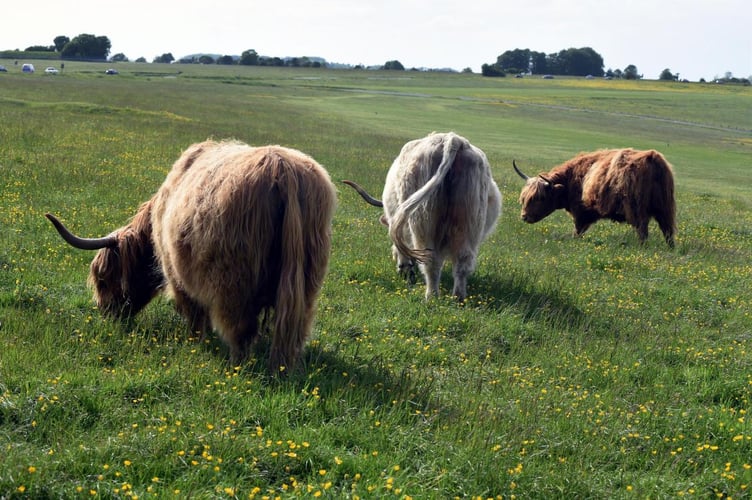
CATTLE are now grazing Felton again, writes Rosie Sage.
It is nearly 30 years since cattle and sheep were regularly seen on the common exercising the ancient rights to graze which has been in place since the enclosure acts. The Enclosure Acts in England were a series of parliamentary laws from the 18th and 19th centuries that consolidated communal open fields and common lands into privately owned, fenced-off plots, replacing traditional shared farming with large, privately managed farms and estates.
Commoners' rights are historical entitlements for people to use communal or privately-owned land for specific natural produce, like grazing livestock, taking firewood (estovers), digging turf (turbary), or gathering acorns (pannage) for their property, rather than for commercial sale, connecting traditional land use to specific parcels of property. These rights, often tied to a farm or dwelling, allow access to common lands but are distinct from general public access and vary by location.
The register of common land under the Commons Registration Act 1968 shows that the rights to graze Felton Common extend to 1544 head of cattle, sheep, horses and donkeys.

Spokesman for the commoners, Wat Tyler said: “The reintroduction of cattle to Felton Common using virtual fencing technology is important for a number of reasons. Some of the ancient limestone grassland has been swamped by bracken and brambles in the absence of cattle making parts of the common virtually inaccessible.
“Winford Parish Council have a stewardship agreement in place which requires annual cutting and rolling of the common to control bracken. The cattle will fulfil the same function in the way nature intended.
“Although it is unlikely that all of the commoners rights will be exercised all at once, cattle grazing will now be a regular sight on Felton Common with the numbers managed by commoners according to the available grazing.”
Comments
This article has no comments yet. Be the first to leave a comment.