

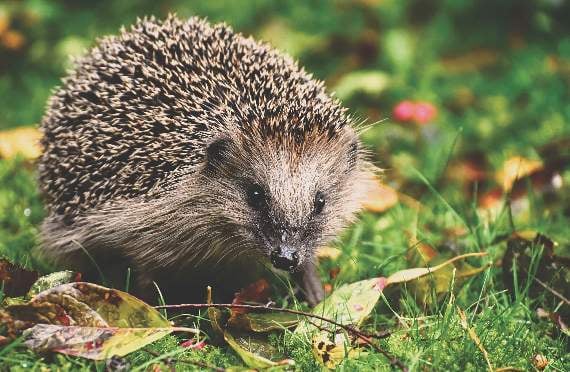
A wildlife expert has warned that the rapid decline of hedgehogs could pose as big a threat to human beings as greenhouse gases heating up the atmosphere.
Avon Wildlife Trust Chief Executive, Ian Barrett, delivered a stark message as he called on Bath and North East Somerset Council to declare an “ecological emergency.”
The authority has already declared a climate emergency and is ramping up efforts to be carbon neutral by 2030.
The pledge included opposition to the expansion of Bristol Airport and the application was thrown out by North Somerset Council last week. Speaking at the Council’s Cabinet meeting on February 13th, Mr Barrett said the climate and ecological emergencies are linked and nature needs defending in its own right.


“What is happening to wildlife and ecosystems around the world is truly shocking,” he said.
“We’ve lost 60 per cent of populations of wild vertebrates worldwide since 1970. We’ve lost 95 per cent of hedgehogs since the 1950s.”
Mr Barrett said the issues do not just matter to wildlife lovers: “We rely on functioning ecosystems for our air, water, health, quality of life, food and economy.
“So, if we manage to transition to a zero-carbon economy and fix the climate crisis, but our ecosystems collapse, we still face an existential threat to our future.
“The Council’s current strategy talks about the natural emergency, but the priorities and actions set out are all about carbon. This is only half of the solution.”
He said the Council is already doing a lot of work on ecology, through projects like Bathscape, which is revitalising the landscape, and through its woodland strategy.
“Leadership in this area will help to establish momentum nationally and regionally, bringing more focus to the action needed to save our natural environment for people and wildlife.
“Declaring an ecological emergency is a small step, but could provide a crucial rallying point for action to save our natural environment for people and wildlife.”
Mr Barrett said the Council needs to stop the destruction of habitats; protect, enhance and link existing wildlife hotspots; manage other land sympathetically for wildlife and make our food and farming
system more wildlife friendly and sustainable; and stop the routine and unnecessary use of pesticides.
In a written statement, Councillor Sarah Warren, the Cabinet Member for the Climate Emergency, said the Council goes to great lengths to protect the environment and is currently looking at how to boost biodiversity and plant more trees.
She told the meeting on February 13th the authority had included the nature emergency in its corporate plan and was considering whether to make a formal declaration.
Bristol was the first major city to declare an ecological emergency earlier this month. It was also the first council to declare a climate emergency. S. Sumner, LDRS
Comments
This article has no comments yet. Be the first to leave a comment.