


A Headteacher who claims a national funding crisis has left his staff at “breaking point” hopes to mobilise mums and dads with the message: “When parents talk, politicians listen.”
Welton Primary School’s budget is expected to shrink by £33,000 a year, but in a meeting held at the school last Wednesday, Headteacher John Snell said it is expected to do more than ever before to support its pupils.
And he is not alone – other Heads in Bath and North East Somerset and across the country are facing tough decisions about whether they can afford to replace staff or simply pay for art supplies.
Parents at the busy meeting offered to donate essentials through an Amazon ‘wishlist’ or volunteer, but Mr Snell said the problem goes far deeper, and urged them to contact their local MPs and Councillors.
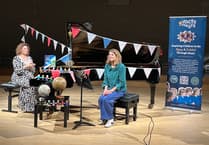



He said: “This is a real problem, not just at Welton – this is a national funding crisis. We have less money than ever before to do what we’ve got to do; and quite frankly, it’s not fair.
“The effects on my school are becoming worse, yet I know that some schools are in an even worse position.”
The meeting heard that 53 of the seventy schools in Bath and North East Somerset are seeing their budgets shrink, on average by £69 per pupil.
Mr Snell said it was not a party political issue, and he would be speaking out, whoever was in charge. Welton Primary School is part of the Midsomer Norton Schools Partnership, but he said that all schools are affected, not just Academies.
He added: “At Welton Primary School, our commitment to providing the very best education for the children in our care has been eroded over the years by central government funding. The biggest impact to my school is due to a triple whammy – of reduced funds to education and health and social care, resulting in considerable additional costs at a time when less money is available.”
Mr Snell said if staff leave, he has to think carefully before replacing them, and it is becoming very difficult to support children with special educational needs. It costs, for example, £300 per session with a child psychologist and this impacts on school budgets. Whereas doctors and the health service used to be able to help, costs are being passed on. He said: "Our Speech and Language Therapists are also becoming more expensive, and the school nurse we only see around two or three times a year. We are educationalists, yet we are regularly having to deal with medical issues."
He added: “We also have to consider carefully whether we can afford to do something with a class of children before we begin; such as projects with art resources like paint or clay.
“We are clearly having to do more with less.
“Most noticeably, on a day-to-day level, this is having a hugely detrimental impact on the mental health of my team, and I include myself in this. With staff having to do more – and let’s be honest, it’s because we want the best and don’t want to let anyone down – my team are at breaking point.
“I do not recognise the government’s stance that ‘there is more money in the system’ – that’s because there are more pupils in the system. I believe that there is money available, with a moral decision to be made about where it is going.
“A perfect storm is not brewing, it has hit.
“And this is one reason why Headteachers and teachers are leaving the profession. Local schools are working on a knife edge. If one member of staff is absent, the knock-on effect is considerable. The impact on everyone else’s workload is extreme. The stress on staff increases.
“Quite simply, unless funds increase at a national level, I cannot see a pretty end to this particular story.”
B&NES Labour spokesperson for Education and Ward Councillor for Paulton, Liz Hardman, said: “The more we raise the profile of this issue, the more that will get done. There is money for education. We just have to make sure we get it.”
Jason Ferraby, from the National Association of Headteachers, said campaigns are launching across the country to put pressure on the Government.
He said: “When Heads talk, parents listen – but when parents talk, politicians listen. We’re encouraging parents to take the lead on this issue.”
He said subjects like art and music are the first to be cut, and warned that if no one is able to study them, there will ultimately be no one to teach them.
The meeting heard that where PTFAs had previously paid for luxuries like new computers, they are now funding essentials, such as books and glue sticks.
Parents’ offers to donate stationery or volunteer were welcomed, but they were told the long-term solution is to urge the Government to inject more money into the system. PTFA Chair, Jill Scarborough, said: “The parent power is to hassle the government – that’s the help that is really needed. You already donate huge amounts to the school and support our events extremely well. The huge funding cuts are not something we can subsidise as parents.”
Parents were encouraged to write to local MP, Jacob Rees-Mogg, with their concerns and to spread the word to other parents at local schools. A further meeting is being held at Saltford Hall (BS31 3BY) from 7 p.m. on Wednesday, June 27th.
If you are a concerned parent, you can see just how funding cuts are affecting your local school at: www.schoolcuts.org.uk You can also find out more or become involved with the local campaign by emailing: [email protected]
Comments
This article has no comments yet. Be the first to leave a comment.