
CONTROVERSY still surrounds a Midsomer Norton town council decision earlier this year to end funding to a local trust.
A column in the Journal has reignited the debate around why the council voted in February to stop funding the Midsomer Norton Community Trust.
Services delivered by the group were moved in-house with the council taking over formal management of assets including the Orchard Hall and Somer Centre.
Letters to the Journal over the past months have highlighted the plight of the trust; especially the loss of work for the trust manager, describing the decision to withdraw funding as “a slap in the face for volunteers who have delivered these events for years.”
So why was the decision made?
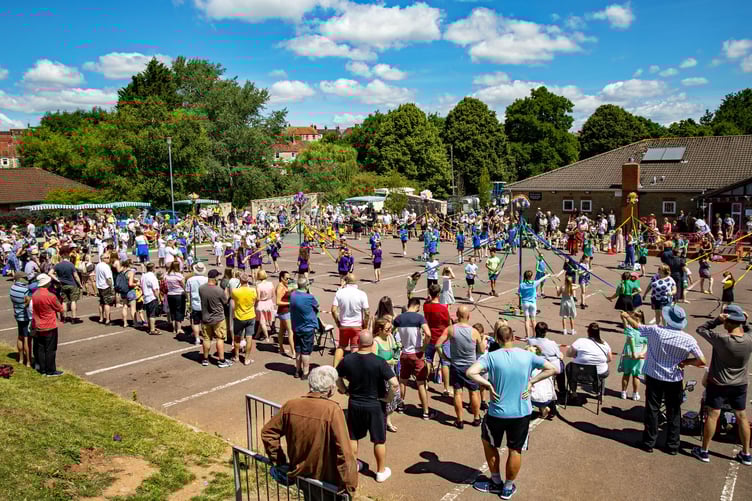
For more than a decade, Midsomer Norton Community Trust organised the town's annual events programme, including the Town Fayre and Christmas Fayre, with grant funding from the Town Council.
Yet by 2024 a formal, independent, investigation had identified concerns the council could not ignore.
As part of that investigation commissioned by the council and carried out by an experienced former town clerk, councillors, officers, former staff, and the Community Trust's own manager were interviewed.
The findings - A Report into the Effectiveness of Midsomer Norton Town Council - was stark.
It considered the Town Trust, the Community Trust, and the Recreation Trust, and found their work confusing, poorly understood by residents, and undermining of the council's own identity and purpose.




In fact, the investigation noted that the Trusts duplicated functions the council could perform itself, relied on council officer time without any financial recharge, and left residents unclear about who was actually responsible for delivering services in the town.
A full review was recommended with a view to dissolving the Trust arrangements and a more careful look at the grant relationship.
The council's own internal auditor had raised the same concern separately, noting that grants paid to associated trusts were not supported by the kind of detailed financial analysis needed; public money requires public accountability.
When the Community Trust submitted its application for the 2026 events programme, the supporting documentation was felt to fall short of that standard.
Bank statements were fully redacted providing no financial transparency, no invoices or quotes supported the stated event costs, and there was no evidence that other funding sources (match funding) had been explored.
Investigations by an independent auditor identified the same structural problem and the council had to act.
It decided to bring event delivery in-house through a new Community and Events Committee with delegated authority, published agendas and formal accountability designed to address those concerns around public accountability.
Ian Nockolds, an advisor to Town and Parish Councils, said: “Direct council delivery means residents can see who is making decisions, what things cost, and who is responsible when things go wrong.
“It also removes the ambiguity about brand and identity that the independent investigation identified as a source of public confusion.
“The transition has not been without difficulty, not least because of the hostility towards the Council promoted on social media, but the aim is to build on the legacy of free to access public events in the town, within a structure that meets the governance standards residents are entitled to expect.”
* When first published, this article mistakenly attributed findings of the "Report into the Effectiveness of Midsomer Norton Town Council" specifically to the Community Trust when they applied to the Town Trust, the Community Trust, and the Recreation Trust collectively. It was edited on July 28, 2026.