
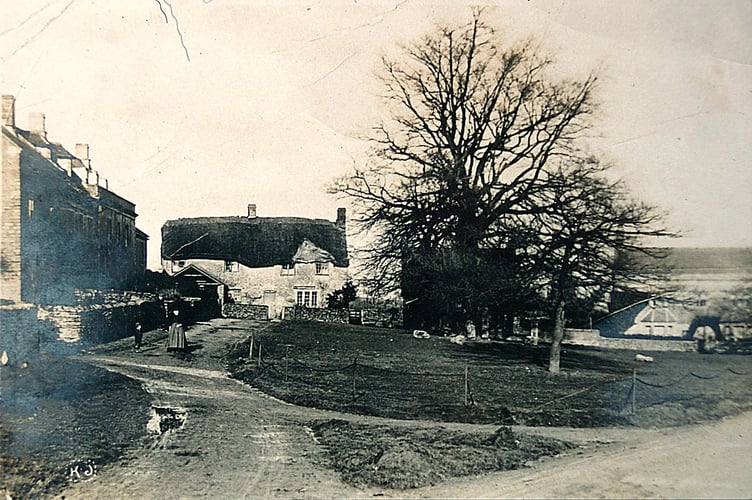
CAN you guess where this week’s Mystery Photograph was taken?
Each week, the Journal invites readers to test their local knowledge by identifying a historic location from days gone by.
Last week’s Mystery Photograph was identified as showing the Timsbury Coal traction engine and wagons on Lower Bristol Road in Bath.
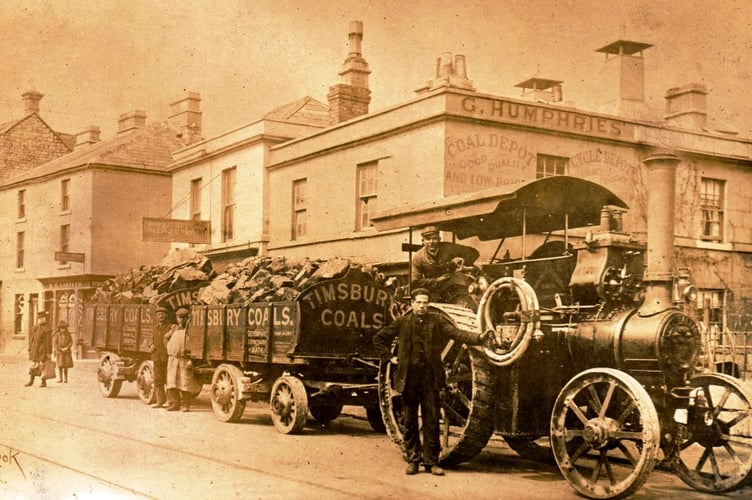



Congratulations to John Goold, who correctly identified this one, he said: “This week’s photo was taken outside the Golden Fleece pub on Lower Bristol Road, Bath. The pub is still there.
“The engine driver (the man on the engine) was Mr Walley, a well-known steam engine driver of the time from Wick Lane, Camerton. He would have been hauling coal from Timsbury Colliery (Coal Pit Corner) to Bath via Farmborough.”
Before the widespread use of motor lorries, traction engines were commonly used to haul heavy loads such as coal from local collieries to nearby towns and cities. In the late 19th and early 20th centuries, coal from pits around Timsbury and Camerton was frequently transported by road to Bath, particularly where rail connections were limited or impractical.
Routes through villages such as Farmborough formed part of these journeys, with traction engines often pulling several wagons at a time. Drivers like Mr Walley would have been skilled operators, responsible not only for controlling the engine but also for managing road conditions, gradients and stopping points along the way. Public houses such as the Golden Fleece were well-known landmarks on these routes, and scenes like this would have been a familiar sight to residents at the time.
Traction engines were also subject to strict regulations, including the requirement for a man to walk ahead with a red flag in some periods, warning other road users of the approaching vehicle. Their slow speed meant journeys could take many hours, or even days, reinforcing the importance of roadside inns and stopping points for rest, water and coal supplies along the route.
Comments
This article has no comments yet. Be the first to leave a comment.