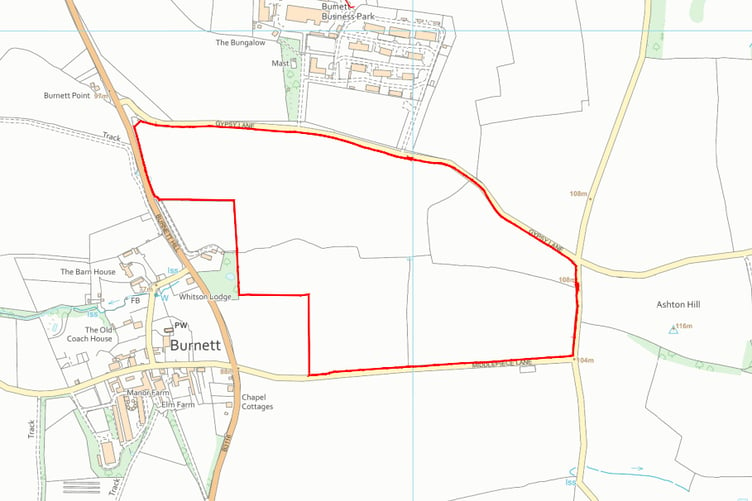
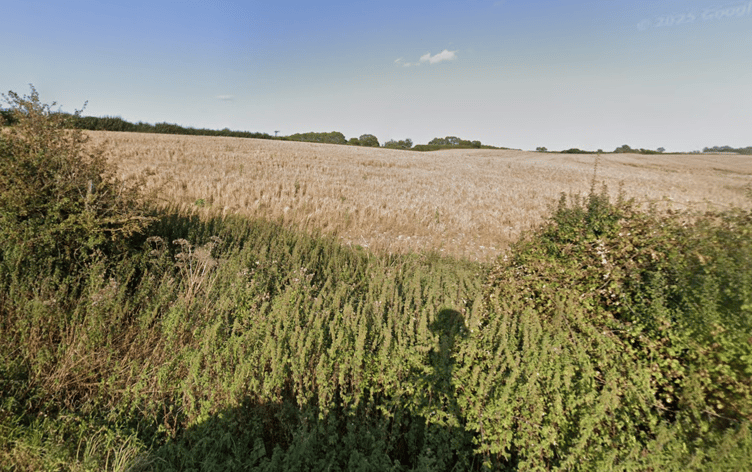
A solar farm blocked by local councillors can now go ahead, as the fields it would be built on have been ruled to be “grey belt”.
Bath and North East Somerset Council’s planning committee had voted to refuse planning permission for the 28-hectare solar farm in September 2025. People from the neighbouring village of Burnett warned it would spoil their “rural idyll” and councillors agreed that it would be an inappropriate development in the green belt.
But now it has been approved after an appeal to the government’s planning inspectorate, which ruled that the fields were “grey belt” and not green belt after all. The idea of grey belt was introduced by Labour as a way to ensure that developments on low quality areas, such as former car parks, were not blocked just because they lay inside the green belt.
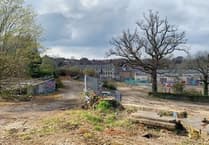
These fields have never been previously developed and lie in the open North East Somerset countryside, just across the brow of a hill from Keynsham. But the planning inspectorate said that it was precisely because they were not next to the town that they could be classed as grey belt, as it was not contributing to the purpose of the green belt.
Planning inspector R. E. Jones said: “Whilst the appeal site appears large when viewed at a local level, it nevertheless occupies a very small proportion of the intervening green belt land between Keynsham and Bath. Its development as a solar farm would not therefore result in a loss of visual separation between these towns.”
The inspector said that the plan would “industrialise a sizeable part of the local countryside” and harm the landscape character, but warned this had to be balanced against the positive impacts. The solar farm would generate up to 22 gigawatt hours of clean electricity a year, enough to power 5,574 homes.
The planning committee’s decision to block the solar farm, despite the council having declared a climate emergency, was controversial at the time. As councillors voted in September 2025, planning committee member John Leach (Walcot, Liberal Democrat) rejected the idea the site would be an “eyesore”.
He said at the time: “I don’t see it as an eyesore and I think future generations will be even more likely not to see this as an eyesore but to see it as a possible sign of our efforts to deal with a crisis as a crisis.”
Conrad Energy says on its website that the project could power the equivalent of up to 6,331 homes, and would include a a battery storage facility to maximise efficiency.
“Estimates show a potential saving of around 5,608 tonnes of CO2 every year, equivalent to driving 72,849,360 miles in a car. The project is fully reversible and after 40 years the rested land will benefit from increased biodiversity and an improved ecosystem,” it said.
As part of the planning process, Conrad Energy is required to demonstrate that there will be a biodiversity gain on site.
Find out about planning applications that affect you by visiting the Public Notice Portal.