
By Hazel Wedlake
IT WAS lovely to hear the noisy chatter of a hundred or so birds silhouetted in a hedgerow tree . Starlings, I assumed as few other birds gather like this and I did see a murmuration later in the area.
Another unexpected sighting one evening, was when I thought I saw the outline of an otter in Chew Stoke. It appeared briefly in my headlights as I paused by the ford, and slipped back into the water from a short section of concrete. The profile would be similar to a small badger and I was surprised to read badgers can swim if they need to cross a waterway, but I was interested to hear from a person involved with managing Chew Valley lake that otters are indeed spreading along the Chew waters.
Late February, early March evenings see volunteers risking their own safety rescuing toads crossing the road to Chew Valley lake. A local volunteer explained the toads go back to breed in the same place they were spawned every year, but now we’ve put a road in the way!
-planting-trees-with-local-school-children-and-Vicki-Cracknell-from-Avon-Needs-Tr.jpeg?width=209&height=140&crop=209:145,smart&quality=75)
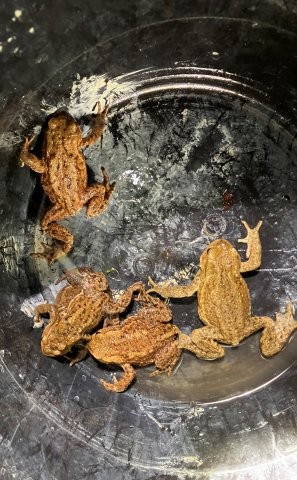
The conditions have to be just right, preferably wet, not too windy and above nine degrees. Many are now already on their way back, but have to make the same perilous journey. They have only had a couple of really busy nights this year and possibly the numbers were down. With climate change and our very wet early spring toads may have been crossing earlier than expected. The Amphibian and Reptile Conservation website gives a figure of 17 per cent less sightings of frogs and 30 per cent less sightings of toads - figures which they are currently researching. Road kills and loss of habitat maybe factors. When our long grass in the stream-side orchard was cut last autumn, seven toads were seen and moved away from danger into grass mounds, so I hope they are still there. Thanks to Pete Brownlee who supplied me with the toad patrol information and an excellent photograph of four toads in the bucket.
I love to see the sheep all snuggled up under a hedgerow oak, where they are lucky to have natural cover. In the mid sixties, arable farmers were encouraged to take hedgerows out to grow more grain. My uncle ran a land clearance firm at the time, clearing hedges on a daily basis.
I know my father had a hedge removed in order to double a field size disrupting the footpath which ran alongside. I also remember some grumblings as the footpath led to the local pub! Luckily now, landowners are being encouraged to plant trees and hedges, so things turn full circle.
My husband discovered an interesting rucked up earth circle on the edge of a field - the outline of a previous manure heap. He wondered if badgers had moved in digging out the worms attracted to the rich soil. As always, one form of wild life feeds off another and completes the food chain.
Comments
This article has no comments yet. Be the first to leave a comment.