
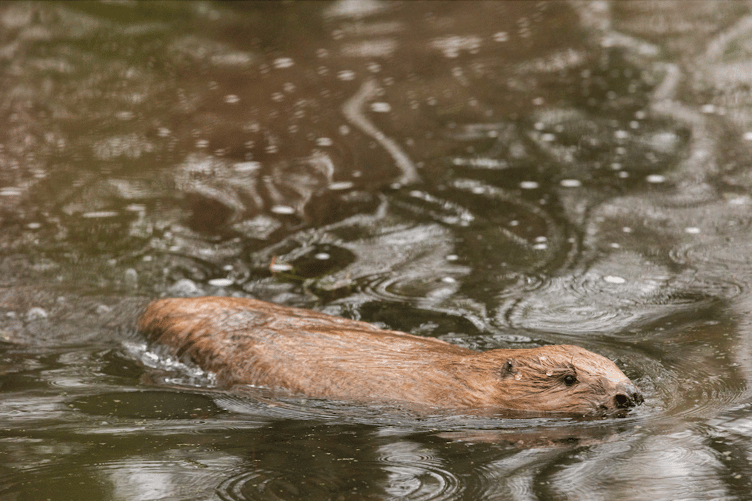
BEAVERS are experiencing a come back from near extinction, yet the origin of the local beaver population remains a mystery.
Hunted intensively for their meat and fur to make hats and coats, and for a secretion they produced called castoreum used for medicinal purposes, numbers across Europe dropped to around 1,000 in the 18th century.
Small populations of the Eurasian beavers have managed to become re-established with subsequent releases into the wild including the first official release in the UK in Knapdale on the West Coast of Scotland in 2009.
Since 2025, the government has permitted releases of beavers into the wild, under licence with a first licensed wild release in Purbeck in Dorset in 2025 and there are a number of wild release projects currently underway or at the planning stage around the country.
Despite beavers never being released in the local area, the first signs of beavers in the Bristol Avon and Somerset Frome catchment area, which includes the River Chew and Cam and Wellow Brooks, started to appear in the early 2000s.
Beaver Field Officer for Avon Wildlife Trust, Dan Brunton said: “The population has grown and now beavers are broadly dispersed across the area.
“We believe that the Avon catchment now has the third largest population of wild beavers in England, after Devon and Kent.”
More than 100 beavers are thought to live all the way along the main River Avon, from the urban fringes of Bristol, up through Bath, Chippenham up to the headwaters around Malmesbury.
They are also present on many of the tributaries, including the River Chew, Somerset Frome, River Mells, By Brook, Cam Brook and Wellow Brook.
Genetic analysis of the beavers in the Avon area suggests they probably originate from Bavaria in Germany and Tayside in Scotland. How they got here, however, remains a mystery.


Dan said: “There have not been any official beaver reintroductions in our area, so the beavers we have living wild in Avon must either have escaped from enclosures or collections, or they have been illegally released - known as ‘beaver bombing’.”
Despite bringing benefits, beavers can also occasionally create issues for farmers and landowners including dams causing localised flooding, burrows collapsing and tree damage.
“Because the beavers in the Avon area were not officially released, there was no forward planning or landowner engagement and landowners have largely been left to deal with the beavers themselves,” he added.
Farmers in particular are already under a lot of pressure with the arrival of beavers on their land a further unwanted consideration they have to deal with.
Despite never having any formal release of beavers in the local area, the local population is spreading fairly rapidly with regular reports of beavers appearing up in new places. Yet as nocturnal creatures, it’s hard to monitor.
“We do carry out surveys to find out more about the beavers in specific areas. These can involve teams of surveyors walking slowly along the riverbank, keeping a sharp eye out for signs of beavers like gnawed wood and bark, or possibly other signs like dams, burrows and lodges,” Dan said.
“We also carry out surveys using camera traps to record footage of beavers active at night.
“These can give brilliant insights into their behaviour which would otherwise be hidden, such as dam repair work or social family interactions.”
The Bristol Avon & Somerset Frome Beaver Advice and Support Team provides free, practical, on-site advice and support to farmers and landowners who are dealing with beavers while the Beaver Trust will come out and do a site visit and provide advice on the best approach.
They have the necessary licences from Natural England to carry out beaver management and are also connected up to national experts so we can bring in the latest best practices to address issues.
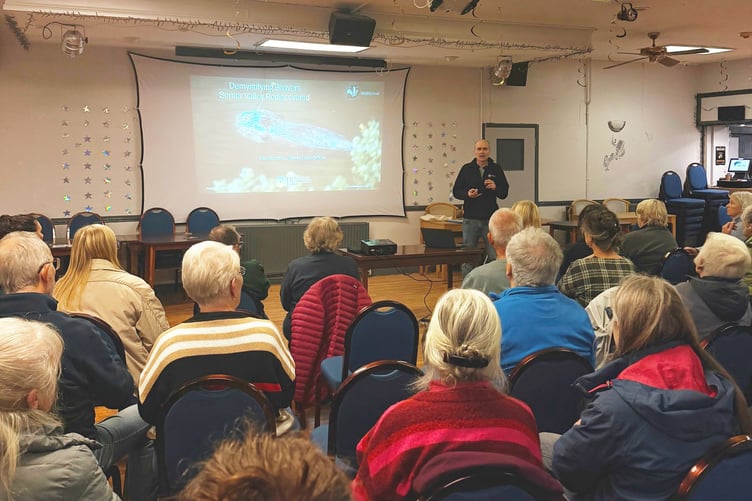
The Beaver Trust hold regular talks through parish councils and local groups including a recent talk to Somer Valley Rediscovered at the Westhill Sports Club in Radstock, to around 60 people.
The goal of all these training and engagement events is to improve awareness of beavers generally and also to help everybody become “beaver ready”.
Anyone going out beaver spotting is asked to follow The Beaver Code to protect beavers and landowners available on the website.
Dan added: “As riverside vegetation dies back over the winter, it becomes easier to spot tell-tale signs of beavers, like gnawed wood and wood chips.
We mainly rely on members of the public reporting their sightings so we can track how the population is doing.
“If people see any of these signs while out on winter walks, please can they help by filling out the form on our website and to let us know if they come across a sick, injured, trapped or dead beaver.”