

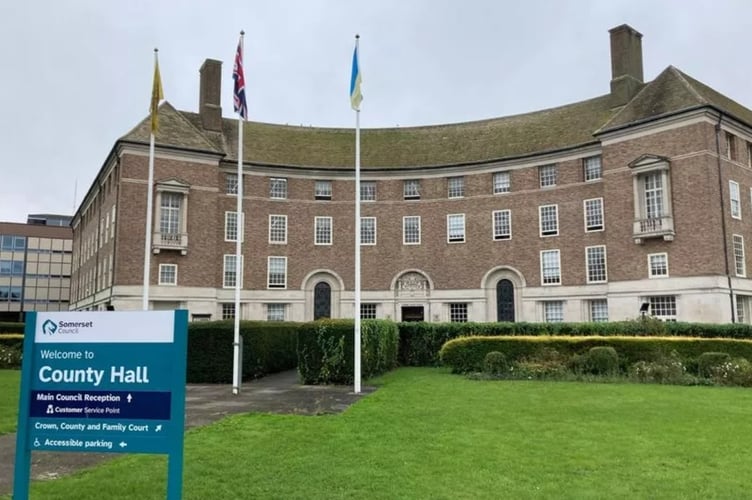
THOUSANDS of Somerset’s most vulnerable people have faced sharp rises in their council tax bills following recent changes in central and local government policy.
Somerset Council made changes to its council tax reduction scheme before setting its annual budget in February, intended to standardise the level of support offered across Somerset while addressing its wider financial pressures.
A study by Citizens Advice Somerset has since discovered that more than 4,000 people receiving universal credit, specifically the limited capability for work-related activity (LCWRA) element, have been hit with higher council tax bills as a result of the council’s changes coinciding with wider central government reforms.
The council has responded that it would be reviewing its council tax support scheme ahead of next year’s budget and “remained committed to supporting residents” during this process.




Councillor Caroline Ellis, who represents the Bishop’s Hull and Taunton West division, raised the issue when the council’s executive committee met in Taunton on Wednesday morning (November 5).
She said: “On October 2, Citizens Advice Somerset sent a briefing to all councillors highlighting how our council tax reduction scheme has made a veryvulnerable group of universal credit claimants – those receiving the LCWRA element – suddenly and considerably worse off, with damaging consequences for their health and well-being.
“Citizens Advice pointed out that this group of disabled people, who are unlikely to ever be able to work, have been hit by council tax bills of several hundreds of pounds following their forced migration from income-related employment support allowance (ESA) to universal credit.
“Their income has not changed – all that has changed is the name of their benefit they rely on to live.”
Under the previous council tax reduction schemes run in Somerset, those on income-related ESA were eligible for a 100 per cent discount on their council tax bills.
Citizens Advice Somerset has found that up to 4,481 residents may have been hit with higher bills as a result of these reforms.
One such individual, identified only as ‘Shaun’ in the study, saw his council tax support reduced from 100 per cent to 10 per cent – leaving him more than £1,000 a year worse off.
Shaun, 52, is currently under the care of a psychiatrist and takes various medications for a range of mental health issues, leaving him incapable of working.
Ms Ellis continued: “It sent chills through my spine – and I have residents affected by this who I am deeply fearful for.
“Why has there not been a consultation this year in light of the negative impacts of the policy? Has administrative convenience been prioritised over the well-being of disabled people?”
The then-Conservative government began moving people from “legacy benefits” (such as ESA or job seekers’ allowance) onto universal credit from 2016 onwards, in a bid to cut bureaucracy – a transition which was expected to be completed by 2028.
The Labour government has continued this transition but has sought to speed up the process, aiming to complete all movement across to universal credit by April 2026.