
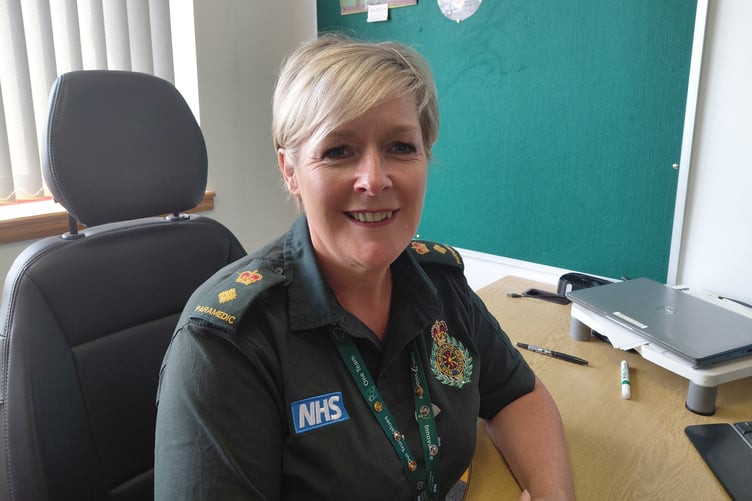
DIALLING 999 and asking for an ambulance is something we all hope we never have to do.
The call goes through, you give the details to the operator, and then you wait, hoping and praying help will come as soon as possible.
However, while you wait anxiously on one end of the line, at the other end a highly qualified, incredibly responsive team is calmly leaping into action, ensuring you get the service you need.
Working for the South Western Ambulance Service NHS Foundation Trust (SWASFT) is not for everybody.
But, for the right kind of person, it is a job that can really get under your skin in the best possible sense.
The trust provides ambulances services for about 10,000 sq miles across the Westcountry, covering about 20 per cent of mainland England.
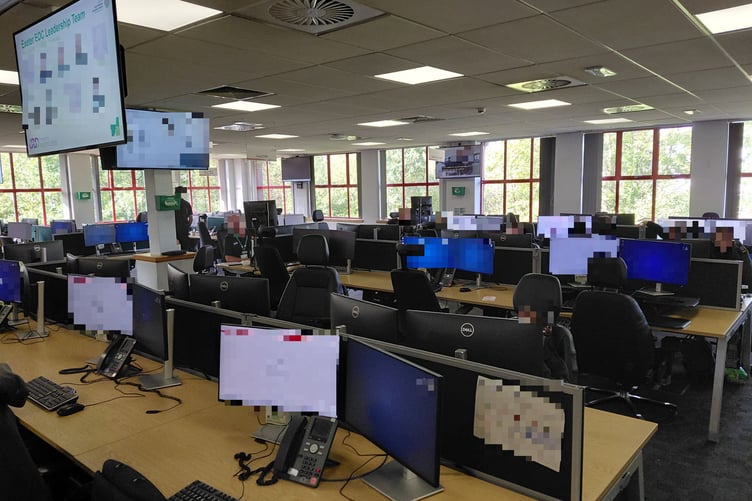
The Local Democracy Reporting Service was granted an extensive peek behind the scenes at the trust’s emergency operations centre (EOC) in Exeter, showing what happens every step between a 999 call being picked up and the paramedics arriving at the scene, if required.
Jo Gadsden, head of the EOC, said this year’s heatwaves had put significant pressure on the service, with a sharp rise in 999 calls and additional resources brought in to help manage demand.
Ms Gadsden said: “The number of calls we receive can range from around 2,900 a day to more than 4,000.
“We reached those higher levels in May and again in June, when temperatures began to rise.




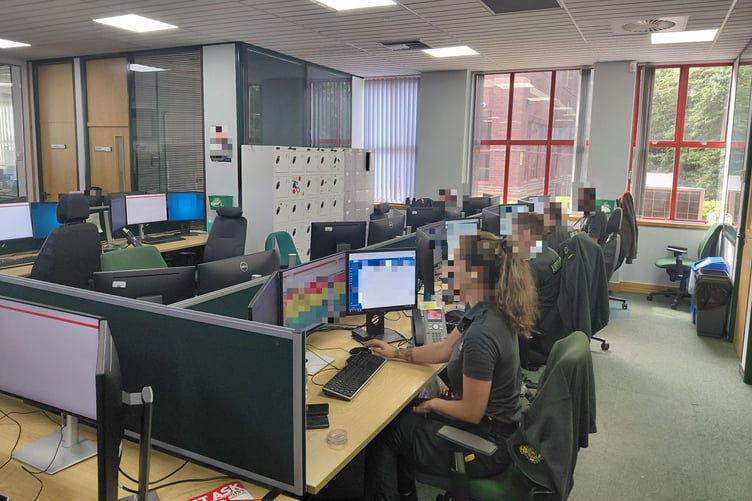
“This summer’s extreme heatwaves brought some of the busiest days we have ever seen with activity peaking at more than 4,200 incidents a day.
“We have robust plans to cope with increased levels of demand, and that might mean that our lower acuity calls may not routinely get an ambulance response.
“But, all of our processes are geared to make sure that the most poorly patients are prioritised in getting an ambulance and getting help from us.”
During the heatwaves, the trust was on the front foot with its communications strategy, reminding the public to carefully choose which NHS services they used, for instance, going to a pharmacy rather than ringing 999 in the case of sunburn.
Ms Gadsden said: “We cannot increase the number of ambulances we have, though we can put additional hours on if we have those ambulances.
“One of the main focuses for us here is increasing the numbers of EOC clinicians, where they are helping people remotely on the phone rather than us sending an ambulance.
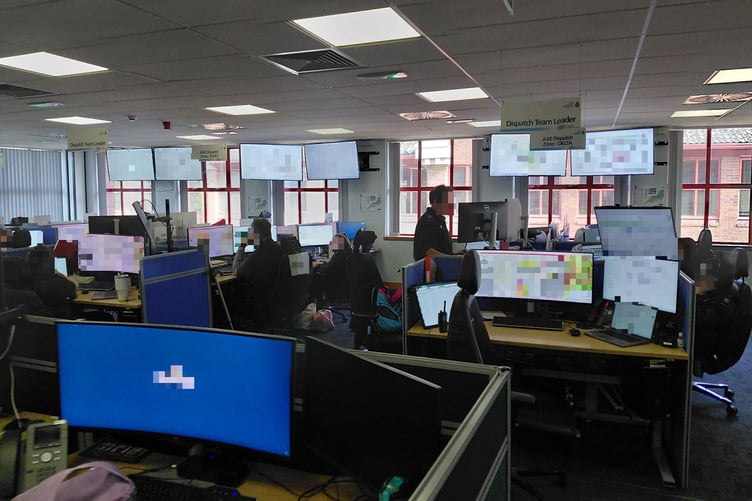
“In May, we had a lot of doctors and clinicians coming into the EOCs, both in Bristol and Exeter, to help more people on the phone remotely.
“I think we reached our peak of managing to treat people on the phone at that time.”
When a call comes through, it is answered by an emergency medical dispatcher (EMD), a 999 call handler whose job it is to triage calls according to medical need.
The EMDs follow a detailed script and are trained to calm down anxious or panicked people, as well as flagging up abusive callers, all while taking all the information needed to initially assess the patient’s condition.
Every EMD receives five weeks of classroom-based training followed by four weeks of supervised learning within the EOC, ensuring patients receive the precise help they need and ambulances are dispatched where they are required.
An EMD may handle about 100 calls in a single shift, with the trust having rigorous procedures in place to ensure staff welfare is front and centre, including screen breaks and a health and well-being area on the premises.
Ms Gadsden said: “EMDs may have five or 10 minutes between the calls that they are taking, but when it gets really busy that gap between calls gets less and less, they are likely to be taking six to seven calls per hour.
“That is for us to juggle and make sure we are still focussing on their welfare to make sure they do get their breaks, but, my goodness, they step up.
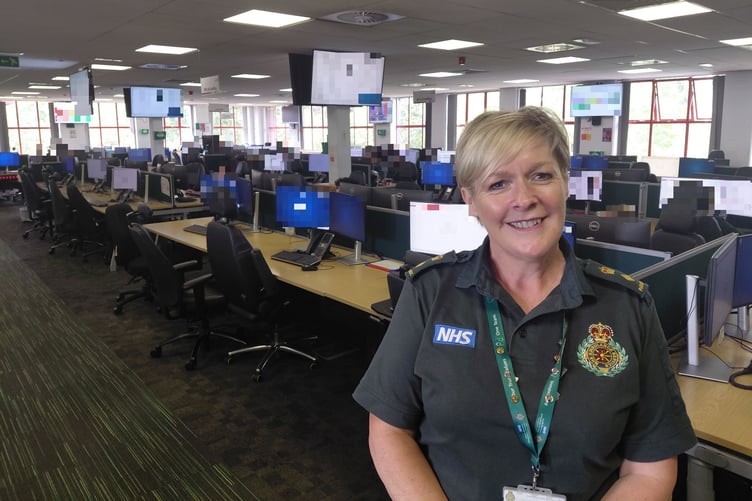
“Resilience is really important, because it is a really, really tough role.
“They are hearing some really traumatic things.
“It is kind of different to when you are on the road as a paramedic, because then you can see the scene and what you are dealing with.
“Our EMDs are very honest about their health, and we are very honest with them about the type of job this is, because there is no point hiding that, because they need to go in, they need to understand what they are letting themselves in for.
“They need to have those natural personal skills, those communication skills, they have to have good listening skills.”
EMD team leaders are present throughout shifts to support staff and make sure they have access to help when they need it, with each leader responsible for between 15 and 18 EMDs.
The trust also has a mentoring programme, providing intensive one-to-one support over a two-week period, as well as trained mental health First Aiders who can spot potential issues and provide support before they escalate.
Ms Gadsden said: “Throughout a shift, team leaders will proactively pull people aside and ask if they are okay.
“It is not a performance review, it is a proper welfare check.
“Whether it is going for a coffee or taking a walk around the block, it is simply about checking in and seeing how that person is feeling.”
While many call centres can resemble the trading floor of a stock exchange, filled with people shouting and phones ringing, one of the most striking things about the EOC is how calm and quiet it is.
Even during the most stressful situations, EMDs find ways to celebrate when things go well, particularly when they help somebody deliver a baby.
Ms Gadsden said: “The EMDs love delivering a baby because they get a badge, pink for a girl, blue for a boy, and a certificate.
“There is always a real sense of excitement in the room when that happens.”
Once an EMD has dealt with the call, ambulance dispatchers at the other end of the room work to ensure the appropriate emergency resources are identified and deployed quickly across the trust’s area.
While SWASFT manages more than 90 ambulance stations across the region, dispatchers do not wait for crews to ‘get back to base’ before being sent out again, with vehicles and paramedics being redeployed in real time as higher priority calls are routed through.
Not everybody who rings 999 will automatically see an ambulance, with SWASFT employing 120 remote triage clinicians, doctors, nurses or paramedics who can provide a robust clinical assessment known as ‘hear and treat’ over the phone to ensure patients receive the right care they need in the right place.
About one in five callers, more than 93,000 patients per year, do not require an ambulance arriving on scene, with clinicians either treating them over the phone or directing them to other facilities, such as pharmacies, minor injuries units, or urgent treatment centres.
By taking this approach, the trust ensures fewer people are conveyed to acute hospitals, including Musgrove Park in Taunton, freeing up much-needed hospital beds.
Comments
This article has no comments yet. Be the first to leave a comment.