
The full interview can be found at: https://www.spreaker.com/show/sounds-of-the-sea. The interview is currently being serialised in The Journal. This week, Dave talks about the Club’s mining heritage.
“There was obviously the mine at Writhlington and the mine in Radstock itself, there was Ludlow pit. The housing below the football ground is Carlingford Terrace, these were all miners’ homes. Two up, two downs that were built by Lord Carlingford in the 1850s for miners. He encouraged sport on a Saturday afternoon, assuming the boys had finished their work of course down the pit in the morning, so he helped fund the club in the early days. They weren’t all miners though as the railways were very important to the club right the way through.
“Certainly, the stand that is on the ground now was built by Marcroft, the railway engineering company that were down in Radstock. And the old railings that we’ve just had removed, a lot of those came off steam engines that were brought in in the 1940s, following some big games at Radstock where the old rope around the pitch just wasn’t sufficient to keep it going. So, Radstock has always been a team made up of guys from hard industries, as were Welton, to a certain degree, although they as Midsomer Norton prior to becoming Welton, had a more, shall I say, professional outlook than Radstock. So, they weren’t all miners or local boys, Welton were looking around to compete at a higher level from day one. So, industry is really key to the history of Radstock.
“It’s interesting, there’s a piece on the history of Yeovil Town that mentions the Battle of Pen Mill, which was a game played in 1896 between Yeovil, as they are now, Town, but they were then simply Yeovil, and Radstock, which was a very bloody affair by the sound of it! Barely refereed and brutal in its performance, it was described as; ‘that’s what you get when you play hard men who believe in themselves.’ And so, the Battle of Pen Mill is an interesting one in Yeovil’s history, as it is in Radstock’s.
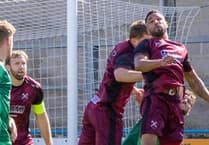
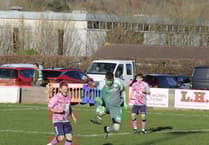

“We’ve had a long history with Yeovil playing them as far back as the 1890s. And, of course, it was Ernie Hyman who left Radstock and died playing for Yeovil Town on Boxing Day 1927, I think it was. His memorial is still in St Nicholas’ Church, Radstock and we thank Yeovil Town for refurbishing that during the pandemic, which was a great effort on their part.
“We also played a lot of games against Swindon Town – I did a quick ‘reccy’ recently and we’ve played over 35 games against Swindon Town at various levels.
“Bristol Rovers, Bristol City Reserves had First Team games, so Radstock have perhaps rested on their laurels for far too long and maybe the history should spur them on now to move forward and do what the founders of the club actually envisaged them being – and that was alongside of Warmley and Eastville and Bedminster St. John’s, who all came on course to be Championship, Premier Division and First Division clubs now.”
Next week Dave will be talking about the big games Radstock Town have been involved in throughout their history.
If anyone has any information, photographs, old programmes, newspaper articles or medals concerning the history of Radstock Town Football Club, then Dave would like to hear from you, as he continues to compile the Club’s history. Dave can be contacted at: [email protected]
Comments
This article has no comments yet. Be the first to leave a comment.